


Starting a home renovation or extension in London is an incredibly rewarding prospect, but navigating the planning permission process can sometimes feel like a daunting hurdle. Long council waiting times and unexpected design rejections have the potential to delay projects by months. Fortunately, Permitted Development Rights (PDR) provide a legal framework that allows homeowners to bypass the full planning application process for certain types of building work. However, properties in the capital face unique geographical and local council constraints. Taking the time to understand exactly what you can build under PDR, and where the exceptions lie, can help keep your project on track. If you are exploring this route, reading a complete guide to property renovation in London is an excellent starting point.
Why Is There a Critical Distinction Between Houses and Flats?

Before diving into what is permissible, there is a fundamental rule we need to address: Permitted Development Rights generally only apply to single-family houses. If you own a flat, maisonette, or a commercial conversion in London, you unfortunately do not have Permitted Development Rights. For these property types, almost any external alteration, change of window style, or structural extension will naturally require full planning permission from the council. If you are looking to remodel a flat, working with a professional interior design company is often the most practical first step. They can cleverly help you optimise your internal layout and smoothly submit the necessary applications to your local authority or management company.
What Exactly Can You Build Under Permitted Development?

If your property is a house, several significant structural additions can be completed under PDR, provided they meet specific, strict criteria.
Can You Build a Single-Storey Rear Extension?
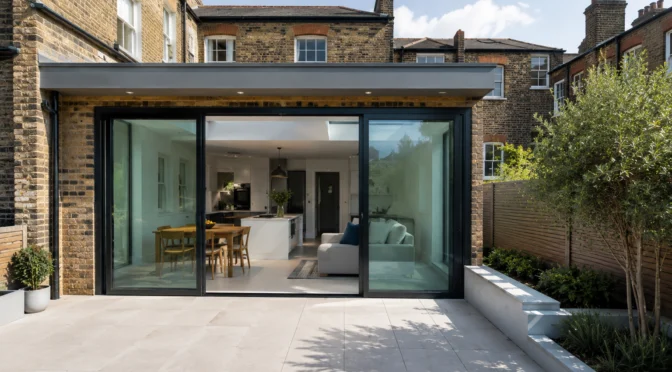
For terraced or semi-detached houses, you can typically extend up to 3 metres beyond the original rear wall of the property. For detached houses, this limit is generously extended to 4 metres. The height of the extension cannot exceed 4 metres, and it must be built using materials that closely match the appearance of the existing house. Before breaking ground, it is always a wise move to consult a guide to home extension costs and design ideas to ensure your budget fully aligns with your architectural vision.
How Do Loft Conversions Work Under Permitted Development?
Loft conversions are an incredibly popular way to add valuable square footage in space-constrained London. Under PDR, you can add up to 40 cubic metres of additional roof space to a terraced house, or 50 cubic metres to a semi-detached or detached home. The primary rules dictate that the conversion must not exceed the height of the original roof ridge, and any new dormers simply cannot face the main highway.
What Internal Structural Alterations Can You Make?
You can freely remove internal load-bearing walls, install robust steel supports, and completely alter your floor plan without needing planning permission (though Building Regulations approval is always a strict legal requirement). When changing your layout internally, utilising expert interior design london services can help ensure your new space flows logically, maximises natural light, and works in perfect harmony with your daily routine.
What Are the London Exceptions Where PDR Is Restricted?

While Permitted Development is a national policy, local planning authorities in London frequently restrict these rights using specific local controls. Understanding the specific renovation guidelines for listed buildings and conservation areas is absolutely crucial before you make any plans.
- Conservation Areas: If your property sits within one of London’s many historic conservation areas, your PDR is heavily restricted. Side extensions, exterior cladding, and roof alterations are usually entirely excluded from Permitted Development and will require a full, formal planning application.
- Article 4 Directions: Many London boroughs deliberately utilise “Article 4 Directions” to completely withdraw Permitted Development Rights in designated neighbourhoods. This is carefully done to fiercely preserve the architectural heritage of the streetscape.
- Listed Buildings: If your home is Grade I or Grade II listed, any work—even minor internal changes—legally requires Listed Building Consent.
How Can You Proceed Safely With Your Renovation?
Even if your planned renovation clearly meets all the criteria for Permitted Development, it is highly recommended to officially apply for a Lawful Development Certificate (LDC) from your local council before starting any construction work. An LDC provides undeniable legal proof that your build was lawful at the time of construction, which becomes a vital document when you eventually decide to sell your home in the future.
Working closely with an experienced renovation company in London is incredibly valuable during this stage. They can effortlessly help draft the precise architectural drawings required for your LDC and ensure that every single element of your build strictly adheres to both planning guidelines and Building Regulations.

