


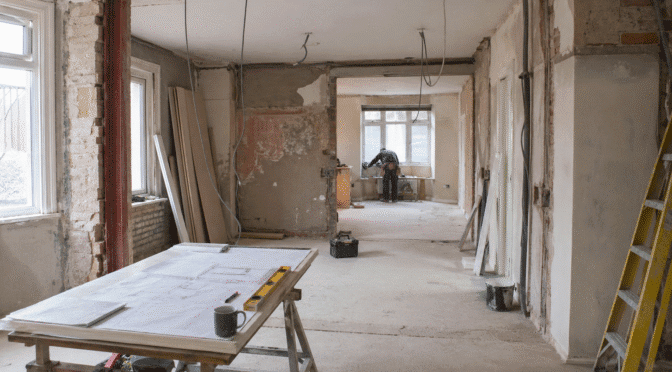
Whether you are planning a full house renovation, a kitchen and bathroom upgrade, or a structural reconfiguration to open up living space, this guide covers everything you need to know before a single contractor is appointed. From realistic cost expectations and planning permission requirements to how to structure your project team and avoid the mistakes that cause renovations to overrun, this is the most practical starting point available for London homeowners in 2026.
What Is a Property Renovation and What Does It Involve?

A property renovation covers any significant improvement to the fabric, layout, or finish of a residential building. In London, this ranges from cosmetic refreshes, new flooring, redecorating, kitchen and bathroom updates, through to full structural renovations involving wall removals, extensions, basement excavations, and complete interior reconfiguration.
The scope of a renovation determines almost everything else: the budget required, the team needed, the permissions to be obtained, and the time the project will take. Understanding exactly what your renovation involves before appointing anyone is the single most important step in the process. Homeowners who begin with a vague brief and a rough budget consistently spend more and receive less than those who invest time in a thorough design and planning phase before any physical work begins.
A interior designer approach, where design, specification, and construction are managed under a single brief, is increasingly the preferred model for London homeowners undertaking complex projects. It removes the coordination burden from the client, reduces the risk of design decisions being poorly executed during construction, and typically delivers a more cohesive finished result.
How Much Does a Property Renovation Cost in London in 2026?

Cost is the first question every homeowner asks, and the most difficult to answer without knowing the specifics of a project. That said, realistic benchmarks exist and are worth understanding before any detailed cost planning begins.
As a broad guide for London in 2026:
- Cosmetic renovation (redecoration, flooring, kitchen and bathroom refresh without structural changes): £20,000 to £60,000 for a typical three to four bedroom property
- Mid-range full renovation (full strip-out and refit, some layout changes, quality but not luxury specification): £80,000 to £180,000
- High-specification full renovation (significant layout changes, premium materials, bespoke joinery, full systems replacement): £180,000 to £400,000
- Luxury full renovation (architectural reconfiguration, high-end stone, custom furniture, smart home integration, basement works): £400,000 and above
These figures are for construction and fit-out only. They do not include professional fees, planning costs, or VAT. Professional fees for design, structural engineering, quantity surveying, and project management typically add 12 to 18 percent on top of the build cost. Always hold a contingency of 10 to 15 percent of the total project budget. On London projects, where hidden structural issues, drainage surprises, and specification changes during the project are common, contingency is not optional.
London also commands a significant premium over UK national averages. Skilled trade rates in the capital are 35 to 50 percent higher than in most other regions, and the logistical costs of working in a dense urban environment, restricted access, working hours limitations, waste disposal, add further.
What Types of Property Renovation Are Most Common in London?
London’s housing stock is predominantly Victorian and Edwardian, with a significant proportion of post-war flat conversions, 1960s and 1970s estates, and new-build developments from the 1990s onwards. Each property type presents different renovation opportunities and constraints.
Full house renovation. The most comprehensive type of project involves stripping a property back to its structural shell and rebuilding the interior from scratch. This typically involves replacing all plumbing, heating, and electrical systems; reconfiguring the layout; installing new flooring, doors, and joinery throughout; and completing the decoration to a finished standard. For a Victorian terrace in good structural condition, a full renovation of this type typically takes four to eight months from start to finish.
Kitchen renovation. The kitchen is the most commercially significant room in a London property for resale value and daily quality of life. A well-designed kitchen renovation in London involves far more than replacing units and appliances. Layout reconfiguration, structural changes to open the kitchen to adjoining spaces, new flooring, ceiling works, and lighting design are all commonly part of a comprehensive kitchen project.
Bathroom renovation. A bathroom renovation in London is one of the most impactful room-by-room investments a homeowner can make. Costs range from £8,000 for a basic refresh to £60,000 or more for a luxury principal bathroom with bespoke joinery, natural stone surfaces, and integrated smart systems.
Loft conversion. Converting an unused loft into a usable bedroom or study is one of the most popular renovations in London, where extending outward is often restricted by planning and garden size. A dormer loft conversion typically costs £45,000 to £75,000 in London in 2026, including stairs, electrics, and a basic finish.
Basement conversion. Basement excavation and conversion is a significant undertaking, but it adds substantial square footage to a London property without affecting the building’s footprint or appearance. Costs typically start at £3,000 to £5,000 per square metre for a full dig and structural build, making a typical 30 to 40 square metre basement extension a £100,000 to £200,000 project before fit-out.
Home extension. Rear extensions, side-return extensions, and double-storey additions remain among the most effective ways to add living space to a London home. Our detailed home extension guide covers costs, design considerations, and the planning process in full.
Do You Need Planning Permission for a Property Renovation in London?

Not all renovation work requires planning permission. Understanding which works fall under permitted development rights, and which require a formal application, is essential before any project begins.
Works that typically do not require planning permission include internal alterations that do not affect the external appearance of the building, replacement windows like-for-like, loft conversions within permitted development limits, and single-storey rear extensions within specified size limits.
Works that typically do require planning permission include extensions that exceed permitted development limits, basement excavations, changes to the external appearance of a listed building, and any works in a conservation area that affect the character of the building or street.
London has a high concentration of listed buildings and conservation areas. In boroughs like Kensington and Chelsea, Westminster, and Camden, planning restrictions are significantly tighter than in outer London boroughs. Engaging a planning consultant or architect with local knowledge before submitting any application reduces both the risk of refusal and the time lost to avoidable amendments.
Party wall agreements are a separate requirement from planning permission and are mandatory for any works that affect a shared boundary wall, including loft conversions, basement excavations, and rear extensions within three to six metres of the neighbouring boundary. A party wall surveyor should be appointed at the earliest possible stage of the project.
How to Structure a Property Renovation Team in London?

The quality of the team around a renovation project has more influence on the outcome than almost any other single factor. London’s construction and design market is large and varied. The range of quality, experience, and approach available is equally wide.
A well-structured renovation team for a full property renovation typically includes:
An interior designer or architect. The design lead defines the spatial layout, material specification, and aesthetic direction of the project. On complex projects, this role also covers the coordination of all technical information between the structural engineer, mechanical and electrical engineers, and the main contractor. A residential interior designer who also manages construction delivery is a particularly valuable asset on full renovation projects, as they maintain design intent through every stage of the build.
A structural engineer. Required for any project involving wall removals, extensions, loft conversions, or basement works. The structural engineer produces the calculations and drawings that contractors must follow for any load-bearing element of the project.
A quantity surveyor. Provides independent cost planning and tender management. A QS brought in at the design stage can identify cost efficiencies before the project goes to tender, and provides a benchmark against which contractor quotes can be evaluated.
A main contractor or renovation company. Manages the physical construction works, coordinates all trades on site, and takes responsibility for the programme and quality of the build. For full property renovations, appointing a single main contractor who manages all trades is almost always preferable to managing individual trades directly.
Specialist trades. Depending on the scope, this may include bespoke joinery manufacturers, specialist tilers, lighting designers, and smart home integrators. For luxury renovation projects, the involvement of a specialist lighting design in London from the early design stages, rather than as a late addition, produces a significantly better result.
The Property Renovation Process: Stage by Stage
Understanding how a London renovation project progresses from initial idea to finished home reduces anxiety, improves decision-making, and helps homeowners hold their team accountable at every stage.
Stage 1: Brief and feasibility. Define what you want to achieve, establish a realistic budget range, and assess the feasibility of the project from a planning and structural perspective. This stage should produce a clear scope of work and a preliminary cost plan.
Stage 2: Design and technical drawings. The design is developed in full, spatial layout, material specification, joinery design, lighting scheme, and translated into technical drawings that contractors can price and build from. This stage typically takes six to twelve weeks on a full renovation.
Stage 3: Planning and statutory approvals. Planning applications, building regulations submissions, and party wall agreements are managed in parallel with the later stages of design. Lead times for planning decisions in London range from eight to thirteen weeks for householder applications.
Stage 4: Tender and contractor appointment. The project is priced by a minimum of two to three contractors working from the same set of drawings and specifications. Quotes are evaluated, references are checked, and the contract is agreed before any work begins on site.
Stage 5: Construction. The renovation is carried out in accordance with the agreed drawings, specification, and programme. A well-managed London renovation at full house scale typically runs for three to eight months depending on scope and complexity. Regular site visits by the design team ensure quality is maintained and that issues are resolved quickly when they arise.
Stage 6: Snagging and handover. A thorough snagging process identifies any items that require remediation before the project is signed off. A reputable contractor will address snagging items promptly as a matter of course.
Common Mistakes in London Property Renovations and How to Avoid Them

Starting construction before the design is fully resolved. The most expensive renovations are almost always ones where decisions were made on site that should have been made on paper. Changes during construction cost two to five times more than the same decision made at the design stage.
Underestimating the budget. London renovation costs are consistently higher than homeowners expect. Budgets built on national average figures, online calculators, or informal estimates without a detailed specification behind them routinely fall 20 to 40 percent short of the actual cost.
Appointing contractors without proper due diligence. A contractor who wins on price alone is a risk. Checking references from comparable completed projects, verifying insurance and accreditation, and understanding how the contractor manages subcontractors are all essential steps before any contract is signed.
Not integrating design and construction. When the designer and the builder are working from different information sets, the gap between the design intent and the built result widens. A turnkey interior design and renovation model, where a single team manages design and delivery, eliminates this risk and is increasingly the preferred approach for high-value London renovation projects.
How Property Renovation Adds Value to a London Home?
A well-executed property renovation adds value in two ways. It increases the market value of the property directly — a full renovation of a Victorian terrace in a prime London location typically adds 20 to 35 percent to the property’s value, depending on the quality of the finish and the specification of the works. It also adds lifestyle value that is harder to quantify but immediately apparent in daily life: space that works properly, light that is considered, materials that are a pleasure to live with.
The key to maximising value return is ensuring that the renovation is designed with the property’s context in mind. A specification that is out of step with the price bracket of comparable properties in the area — either too modest or excessively over-specified, will not generate proportionate returns. This is where the involvement of an experienced luxury interior designer in London adds direct commercial value, not just aesthetic value.
If you are planning a property renovation in London and want to discuss your project with a team that manages the full process from design through to construction, book a free consultation with Oraanj Interiors. We will help you define the scope, understand the costs, and build a plan that delivers the result your property deserves.

