


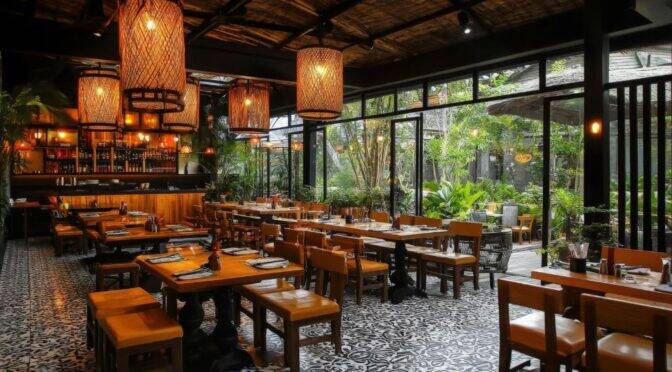
Every decision made inside a restaurant shapes how a guest feels. Few decisions are more powerful, or more frequently underestimated, than colour. The shades chosen for walls, upholstery, lighting, flooring, and tableware do not just define how a space looks. They directly influence how hungry a guest feels, how long they stay, how much they spend, and whether they come back.
For restaurant owners in London investing in an interior fit-out or refurbishment, understanding colour psychology is not an aesthetic exercise. It is a commercial one. This guide explains how colour affects appetite and mood in restaurant environments, which palettes work for which dining concepts, and how professional restaurant interior designers use this knowledge to build spaces that perform as well as they look.
What Is Colour Psychology and Why Does It Matter in Restaurant Design?

Colour psychology is the study of how colours affect human behaviour, emotion, and physiological response. In a restaurant context, this translates directly into measurable commercial outcomes. Research in environmental psychology shows that colour influences the speed at which guests eat. It also affects their perception of food quality, their willingness to linger, and their likelihood of returning.
The effect is not subtle. Diners in warm-coloured environments eat faster. This is a significant factor for high-turnover casual dining venues. Diners in cooler, more subdued colour environments tend to linger longer. They spend more per head and rate their overall experience more positively. This is a critical consideration for fine dining and premium restaurant concepts.
What makes this particularly relevant for London’s hospitality market is the density of competition. When two restaurants of comparable quality sit within walking distance of each other, the one that makes a guest feel something will win the repeat visit. Colour is one of the primary tools a commercial interior designer uses to create that feeling deliberately and consistently. This intentional integration of identity and aesthetic is key to crafting memorable dining experiences in London.
How Do Warm Colours Affect Appetite and Energy in Restaurants?

Warm colours include reds, oranges, yellows, and their various tones and tints. They are the most studied in the context of food and appetite. The findings are consistent. Warm hues stimulate appetite, increase heart rate slightly, and create a sense of urgency and energy in a space.
Red is the most physiologically activating colour in the spectrum. It raises blood pressure and stimulates adrenaline. It has also been shown to increase appetite directly. This is why red appears so frequently in fast food branding and casual dining environments. In a restaurant interior, red works best as an accent rather than a dominant wall colour. It works well in booth upholstery, feature walls, or artwork. Used this way, it energises the space without becoming overwhelming.
Orange carries much of the same appetite-stimulating quality as red, but with less intensity. It reads as sociable, warm, and approachable. This makes it particularly effective in casual dining and neighbourhood restaurant concepts. The desired atmosphere in these venues is convivial and relaxed. Orange tones in timber, brick, and terracotta finishes achieve this effect with considerably more design sophistication than painted surfaces.
Yellow stimulates mental activity and generates a sense of optimism. In restaurant design, yellow works most effectively in spaces that rely on natural daylight. It amplifies warmth and creates a cheerful, welcoming atmosphere. Used at high saturation, however, yellow can become fatiguing over longer dining experiences. It is rarely the primary colour in premium or fine dining environments.
The practical implication is straightforward. If your concept depends on fast table turnover, warm colours are your commercial allies. They stimulate appetite, create energy, and subtly encourage guests to eat and move on. This is a distinction that experienced restaurant interior designers build into every brief from the outset. Aligning your colour choices with wider restaurant interior design concepts that drive footfall helps create a cohesive, profitable business model.
How Do Cool Colours Affect Mood, Dwell Time, and Spend Per Head?

Cool colours include blues, greens, purples, and their derivatives. They produce the opposite physiological response to warm colours. They slow the heart rate, reduce tension, and create an environment that feels calm, considered, and unhurried. In restaurant design, this translates into longer dwell times, higher spend per head, and a perception of elevated quality.
Blue is the colour most consistently associated with suppressed appetite in research settings. This has significant implications for restaurant design. Pure blue as a dominant interior colour is rarely used in dining environments for this reason. However, blue works powerfully when deployed with sophistication. Deep navy in banquette upholstery, blue-grey in wall panelling, or blue tones in glazed tile work all create a sense of refinement and depth. Used this way, the appetite-suppressing effect is avoided.
Green is one of the most versatile colours available to restaurant designers. It is also one of the most commercially valuable in 2026. It sits at the intersection of the warm and cool spectrum. It carries associations of nature, freshness, health, and calm. In the context of London’s growing appetite for biophilic restaurant design, green functions both as a literal element and a chromatic mood-setter. Our lighting design work in biophilic restaurant projects shows that green-led colour schemes combined with warm-toned lighting produce some of the highest guest satisfaction ratings of any palette type.
Purple and plum tones carry associations of luxury, creativity, and indulgence. Deep aubergine, burgundy-adjacent plum, and dusty mauve work particularly effectively in intimate dining rooms and cocktail bar environments. These tones are most powerful as accent colours in upholstery, drapery, or decorative lighting rather than across large surface areas.
Are Neutral and Earth Tone Palettes Always the Safest Choice?
Neutral palettes dominate London’s restaurant design landscape. Whites, creams, greiges, taupes, and warm browns are versatile. They allow food to be the visual focus. They read as clean and quality-conscious. They also age well through multiple seasons of styling updates.
However, neutral is not the same as considered. A poorly calibrated neutral palette can make a restaurant feel flat, dated, and unmemorable. The wrong undertone against a particular lighting temperature is a common mistake. So is a combination of competing warm and cool neutrals. The difference between a neutral interior that feels luxurious and one that feels generic lies almost entirely in the specificity of colour selection. The quality of the interior architecture surrounding that colour also plays a significant role.
Earth tones represent the most commercially robust direction in London restaurant design in 2026. Terracottas, ochres, warm siennas, burnt oranges, and clay tones carry the appetite-stimulating warmth of the orange and red family without the intensity. They pair naturally with timber, stone, and linen textures. They also communicate a sense of craft, provenance, and quality. This resonates strongly with London’s increasingly food-literate dining public.
How Does Lighting Colour Temperature Interact With Interior Colour?
 A modern loft-style restaurant with warm wooden textures, ambient lighting, and a mix of cozy seating arrangements.[/caption>
No conversation about colour in restaurant design is complete without addressing lighting. The two are inseparable. The colour temperature of a light source is measured in Kelvin. It fundamentally changes how any surface colour reads in a space.
Warm white lighting (2700K to 3000K) enriches warm tones and makes food look more appetising. It creates an intimate, flattering atmosphere. It is the dominant choice in fine dining, neighbourhood bistros, and premium casual dining environments.
Cool white or daylight lighting (4000K to 5000K) heightens the perception of cleanliness and freshness. It is appropriate in fast-casual, health-focused, and café environments where the brand positioning emphasises lightness and transparency.
The interaction between wall colour and lighting temperature is one of the most common sources of expensive mistakes in restaurant fit-outs. A paint colour selected under showroom lighting will look entirely different under the warm downlighting of a completed restaurant interior. This is why colour specification and lighting design must always be developed in parallel. It is a principle that sits at the core of how luxury interior designers in London approach hospitality projects.
How Should You Formulate a Colour Strategy by Restaurant Type?
 Create the perfect dining atmosphere with expert interior restaurant design in London by Oraanj Interior Design.[/caption>
Understanding colour psychology in the abstract is useful. Applying it correctly to a specific restaurant concept is where real commercial value is created.
Fine dining calls for deep, saturated tones. Navy, forest green, charcoal, and burgundy work well. These are combined with warm metallic accents in brass or bronze and warm white lighting. The palette communicates exclusivity, refinement, and occasion. Dwell time and spend per head are the primary commercial objectives. Incorporating these deeper tones aligns with modern luxury restaurant interior design trends, where visual storytelling and spatial comfort directly dictate premium brand success.
Casual and neighbourhood dining works best with warm neutrals, terracotta, and earthy tones. Natural timber, exposed brick, and soft ambient lighting support the palette. The space needs to feel welcoming and approachable without sacrificing quality perception. Social media appeal is increasingly a factor in colour decisions for this sector.
Fast-casual and high-turnover venues benefit from warmer, more energetic palettes with higher contrast and stronger accent colours. Colour is used to create energy and pace. Seating and surface materials also need to read as clean and durable.
Café and brunch venues suit lighter, fresher palettes. Sage green, warm white, dusty pink, and natural linen tones create a relaxed, unhurried atmosphere. These venues typically rely on daytime footfall and social media discovery. Visual distinctiveness is therefore a commercial priority alongside atmosphere.
Biophilic and wellness-focused restaurants work best with green-dominant palettes combined with natural materials, botanical elements, and warm lighting. This is one of the most commercially powerful directions in London hospitality in 2026. It is also an area where Oraanj has developed significant expertise across a range of restaurant projects.
Why Should Colour Decisions Never Be Made in Isolation?
The most important thing a restaurant owner can take from this guide is simple. Colour decisions made without reference to the lighting scheme, the material palette, the furniture specification, or the brand positioning rarely produce the intended result.
Colour in restaurant design works as part of a system. It interacts with light, with texture, with spatial proportion, and with the psychological associations your brand needs to create. Getting it right requires integrated thinking from day one. Getting it wrong is one of the most visible and costly mistakes a restaurant refurbishment can make.
If you are planning a new restaurant, a refurbishment, or simply want to understand how your current colour scheme might be working against your commercial objectives, book a free consultation with the Oraanj Interiors team. We will help you build a colour strategy that serves your brand, your guests, and your bottom line.

