


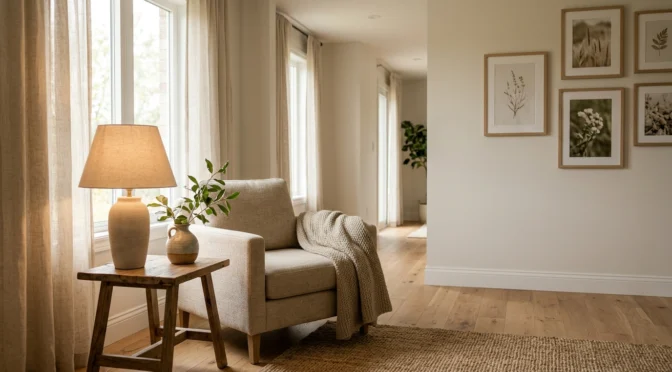
Short answer: A welcoming home is created by thoughtful lighting, balanced layouts, natural materials and spaces that are easy to live in. Furniture plays a part, but it is rarely the reason a home feels comfortable the moment you walk through the door.
We’ve all experienced it.
You visit someone’s home and immediately feel relaxed. You can’t quite explain why, but the space feels calm, inviting and comfortable. Then you visit another house with expensive furniture and designer accessories, yet it somehow feels cold or awkward.
So what actually makes the difference?
Is expensive furniture the secret to a welcoming home?

Not really.
Beautiful furniture certainly helps, but it’s only one part of the picture. A luxury sofa placed in the wrong position can make a room feel cramped, while a modest sofa in a well-planned space can feel far more inviting.
The most welcoming homes are designed around how people live, not simply how a room looks in photographs. This is where thoughtful interior architecture design and careful planning can make a significant difference, creating spaces that feel natural, functional and connected.
Why does lighting matter so much?

Lighting changes how a room feels more than almost any other design decision.
A single bright ceiling light can make even an elegant room feel flat. On the other hand, combining wall lights, table lamps and soft ambient lighting creates warmth and depth.
Professional lighting designs consider how different areas of a home are used, from creating a relaxing atmosphere in living spaces to adding focus and practicality in kitchens or work areas. Natural daylight is equally important. Keeping windows clear, choosing lighter window treatments and allowing daylight to move through the room can completely change the atmosphere.
Good lighting doesn’t draw attention to itself. It simply makes people feel comfortable.
Does the layout affect how welcoming a home feels?

Absolutely.
Have you ever walked into a room and felt unsure where to sit? Or found yourself squeezing between furniture just to reach another part of the room?
That usually comes down to layout and effective space planning.
A welcoming home has clear pathways, comfortable seating arrangements and enough space for people to move naturally. Rooms should feel easy to use rather than carefully staged.
Experienced interior designers understand that successful layouts are about more than fitting furniture into a room. They consider movement, proportions and how each space connects with the next.
Sometimes moving one armchair or repositioning a coffee table makes more difference than buying new furniture.
Do colours really influence how people feel?

Yes, but not in the way many people expect.
There isn’t one perfect colour that makes every home feel welcoming. Instead, the colours should suit the amount of natural light the room receives and work together throughout the house.
Warm neutrals, earthy greens, muted blues and soft natural tones often create a relaxed atmosphere because they don’t compete for attention.
The goal isn’t to make every room colourful. It’s to create visual balance.
Why do some homes feel cluttered even when they’re tidy?
Because clutter isn’t only about how many things you own.
Too many competing colours, oversized furniture, crowded shelves or decorative accessories can create visual noise.
A room feels calmer when each object has space around it.
This doesn’t mean your home should be minimal. It simply means every piece should have a purpose, whether that’s practical, sentimental or decorative. Bespoke elements such as bespoke joinery can also help create a more organised home by providing storage solutions designed specifically around your needs and the character of the space.
Can small homes feel just as welcoming?
Definitely.
Some of the most inviting homes are surprisingly compact.
Smaller spaces often encourage better planning because every piece of furniture needs to earn its place. Clever storage, well-chosen lighting and a simple layout can make a modest home feel warm, functional and generous.
Working with an experienced interior design company can help maximise the potential of smaller properties by combining creativity with practical solutions.
Size creates possibilities, but thoughtful design creates comfort.
So, what makes a home feel welcoming?
It’s rarely one dramatic feature.
It’s the combination of natural light, comfortable layouts, thoughtful storage, balanced colours and materials that feel authentic rather than forced.
At Oraanj Interiors, we’ve found that the homes people remember most aren’t always the largest or the most expensive. They’re the ones where every decision supports everyday life through considered design, from bespoke joinery design and tailored layouts to carefully planned lighting and finishes.
When a home feels effortless to use, people notice—even if they can’t explain exactly why.
If you’re planning to refresh your home, don’t begin by asking which sofa to buy.
Start by asking how you want the space to feel every time you walk through the door.
You’ll usually make better design decisions from there.

