


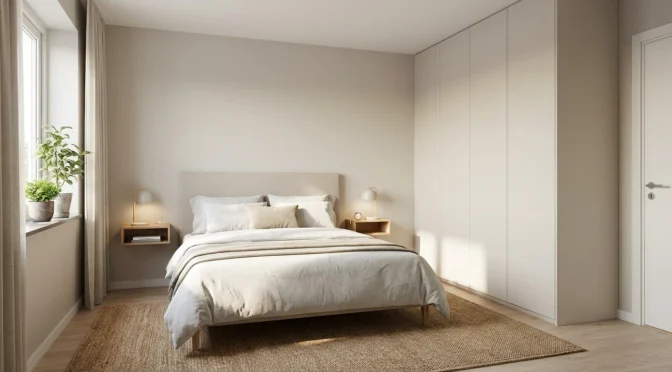
A small bedroom can feel surprisingly comfortable when the layout is right. The problem is that many people start decorating before deciding where the largest pieces of furniture should go. A beautiful colour palette cannot fix a wardrobe blocking natural light, a bed interrupting the doorway or furniture that leaves no comfortable route through the room.
These 4 brilliant tricks for small bedroom arrangement focus on the decisions that create the biggest visual and practical difference. You do not need to remove everything you own or buy miniature furniture. In many cases, changing the position, scale or purpose of just one piece can make the entire bedroom feel larger.
1. Stop Automatically Pushing the Bed into a Corner

When arranging a small bedroom, the first instinct is often to push the bed against the nearest wall. This may create more visible floor space, but it does not always create a better room.
Start by identifying the clearest route from the bedroom door to the wardrobe and window. The bed should interfere with this route as little as possible.
If there is enough space, placing the bed centrally against the most suitable wall can actually make a small room feel more balanced. It creates a clear focal point and prevents the remaining furniture from looking randomly placed.
However, in a genuinely tiny bedroom, placing one side of the bed against a wall may be the most practical option. The goal is not to follow a perfect layout rule. It is to make movement feel easy.
Before moving anything, ask one question: which piece of furniture currently makes the room most difficult to use? Start there.
2. Treat Your Wardrobe as Part of the Architecture
Some of the best small bedroom ideas with wardrobes involve making storage visually quieter rather than simply adding more of it.
A large freestanding wardrobe can dominate a compact bedroom, particularly when it stops below the ceiling or projects awkwardly into the room. Where possible, full-height fitted storage can create a cleaner appearance and use space that would otherwise be wasted.
Consider:
- Sliding doors where there is limited opening space.
- Handleless fronts for a simpler visual effect.
- Internal drawers instead of a separate chest.
- Storage above awkward alcoves.
- Mirrored sections used carefully to reflect natural light.
The wardrobe does not need to match the walls exactly, but reducing strong visual contrasts can help a large piece of furniture feel less imposing.
An experienced interior designer London may also look for opportunities that are easy to miss, such as shallow storage around a chimney breast, wardrobes built above a doorway or a headboard wall that incorporates cupboards and bedside niches.
The smartest storage often looks like part of the room rather than another object placed inside it.
3. Use the Space Around the Bed More Intelligently
The area beside and above the bed is frequently wasted.
Traditional bedside tables can take up valuable floor space while providing very little storage. Wall-mounted shelves, compact floating drawers and integrated headboard units can perform the same function while making the floor appear less crowded.
This is one of the best ways to save space in a small bedroom because it improves functionality without asking you to sacrifice something you use every day.
Think vertically too. A shelf above the headboard, carefully designed overhead cupboards or wall-mounted lighting can free up surfaces elsewhere.
However, avoid filling every empty wall. A small room still needs visual breathing space.
The most successful aesthetic small bedrooms often look simple because storage has been carefully planned behind the scenes. They are not necessarily empty; everyday belongings simply have a logical place to go.
4. Create One Strong Focal Point and Quiet Everything Else
Small bedrooms often feel cluttered because too many elements compete for attention.
A patterned rug, bold bedding, feature wall, oversized artwork and several decorative accessories may all look attractive individually. Together, they can make a compact room feel visually restless.
Choose one main focal point.
It could be:
- A beautifully upholstered headboard.
- One piece of large-scale artwork.
- A rich wall colour behind the bed.
- Bespoke timber detailing.
- A statement pendant light.
Then allow the remaining elements to support it.
This does not mean every small bedroom needs to be beige or minimalist. Deep green, blue, terracotta and even dark brown can work beautifully in compact rooms when the palette feels intentional.
As an interior design company, Oraanj Interiors approaches small spaces by considering the whole composition rather than treating storage, furniture, lighting and decoration as separate decisions.
The Small-Bedroom Mistake That Costs the Most Space
One of the biggest mistakes is buying furniture before measuring how people will move around it.
A wardrobe may technically fit against a wall but become frustrating when its doors open. A larger bed may fit on the floor plan but leave no useful space for storage. A chest of drawers may offer extra capacity while making the entrance feel cramped.
Before buying anything, mark the dimensions on the floor with masking tape. Open imaginary doors and drawers. Walk around the bed. Check whether two pieces of furniture are trying to use the same space.
Ten minutes of testing can prevent years of frustration.
A Small Bedroom Does Not Need to Feel Like a Compromise
The best small bedrooms are not simply larger rooms with smaller furniture. They are designed differently.
Start with movement, make wardrobes feel integrated, use the space around the bed intelligently and give the room one clear visual focus. These four decisions can have a much greater impact than adding more decorative pieces or following every new bedroom trend.
At Oraanj Interiors, we believe limited square footage can encourage more thoughtful design. When every piece earns its place and every storage decision has a purpose, even a compact bedroom can feel calm, comfortable and surprisingly spacious.
The aim is not to make your bedroom look empty. It is to make the space you have work harder without feeling like it is trying too hard.

