


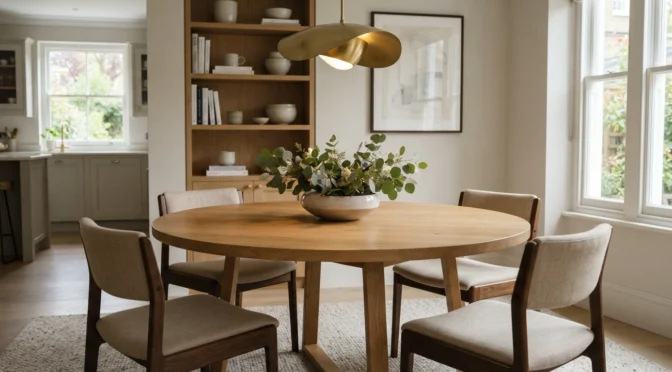
A dining table can look beautiful in a photograph and still be frustrating to live with. Tall flowers block conversation, decorative trays take up half the surface and carefully arranged objects have to be moved every time someone wants to eat. Somewhere along the way, styling the table became more important than using it.
The best dining table decor ideas do not turn the table into a permanent display. They make the room feel considered while leaving enough space for breakfast, dinner, homework, unexpected guests and everything else that happens around the table.
Working with an experienced interior designer London homeowners trust can help create a dining space that balances style, comfort and everyday practicality. A professional interior design company can also help bring together furniture, lighting and finishes to create a cohesive look that feels personal rather than staged.
Why Should You Start with One Statement Piece Instead of Seven?

One of the easiest ways to improve a dining table is to remove most of what is already there.
A vase, bowl or sculptural object can often create more impact on its own than a collection of candles, books, trays and artificial plants.
Before adding anything, consider the shape of the table.
A round table often works beautifully with one central object. A long rectangular table can support a more linear arrangement, while a smaller table usually benefits from something compact.
Good dining table decoration should respond to the proportions of the furniture rather than simply filling empty space.
Why Is an Easily Movable Centrepiece the Best Choice?
This may sound unglamorous, but it is one of the most useful rules.
If your table is used every day, place decorative objects on one tray or use a single arrangement that can be lifted easily. When dinner is ready, you should not need five minutes to clear the surface.
Some of the most practical options include:
- A low ceramic bowl.
- One vase with seasonal branches.
- A compact group of candles.
- A tray containing two or three objects.
- A sculptural piece with enough space around it.
The best table decorations for dining table styling should work with your routine rather than creating another household task.
Why Should You Avoid Centrepieces You Cannot See Over?

A large floral arrangement can look impressive when nobody is sitting down.
The problem begins when guests arrive.
If people need to lean around flowers to have a conversation, the arrangement is too tall. Keep everyday centrepieces below eye level or choose taller branches with enough open space between them.
This is particularly important in smaller dining rooms, where a visually heavy centrepiece can make the entire area feel crowded.
A decorated dining table should make people want to sit down, not create a barrier between them.
Why Does Kitchen Table Decor Need to Be More Practical?
A kitchen table usually has a very different life from a formal dining table.
It may be used for coffee in the morning, quick meals, work, children’s activities and food preparation. That means kitchen table decor needs to be even simpler.
A fruit bowl can provide colour while serving a purpose. A small vase can add softness without taking over the surface. Even an attractive salt and pepper set can become part of the styling.
The mistake is treating a hardworking kitchen table like a display in a furniture showroom.
If the decoration constantly ends up pushed into a corner, it probably does not belong there.
Why Should You Look Up Before Adding More to the Table?

Sometimes the table is not the problem. The space above it simply feels unfinished.
Before buying another decorative object, consider the pendant light.
A well-proportioned light can anchor the dining area and give the table a stronger presence even when the surface is almost empty. Artwork, dining room wall panelling or a nearby cabinet can also add character without sacrificing useful table space.
This is particularly effective in open-plan homes, where you might be exploring open-plan kitchen living ideas and need lighting to visually separate the dining zone from the kitchen and living area.
The table does not need to carry the entire decorative weight of the room.
How Do Your Chairs Contribute to the Overall Decoration?
When styling a dining area, people often focus entirely on the tabletop.
But the chairs, lighting, rug and surrounding architecture already contribute to the overall composition.
If you have colourful upholstered chairs, a dramatic pendant and a beautiful timber table, the surface may need very little decoration. If the room is more restrained, a stronger centrepiece can introduce personality.
Look at the whole dining area before deciding what is missing.
Often, the answer is not another object.
How Can You Update Your Decor Seasonally Without Being Themed?

You can change the feeling of a dining table throughout the year without covering it in obvious seasonal decorations.
Spring may introduce fresh branches or lighter ceramics. Summer can bring bowls of fruit and relaxed linen. Autumn suits warmer textures and earthy colours—a great time to explore autumn home decor ideas—while winter may call for candlelight and deeper tones.
The aim is to change the atmosphere rather than create a themed display.
This approach also means fewer objects need to be stored when the season changes.
How Can You Ensure the Table Still Looks Good When It Is Empty?
This is the real test.
If a dining table only looks complete when it is covered with decoration, the wider room may need more attention.
A beautiful table, well-chosen chairs and thoughtful lighting should create a strong composition on their own. Decoration should be the finishing layer rather than the thing holding the entire space together.
At Oraanj Interiors, we believe dining spaces should be designed around what actually happens there. Some families use the table three times a day. Others mainly use it for entertaining. Many need it to perform several different roles.
The right styling responds to that reality.
For homeowners looking for a refined and personalised approach, working with a luxury interior designer can help transform a dining area into a space that feels elegant while remaining functional for everyday life.
Before buying another centrepiece, remove everything from your dining table and look at it again. You may discover that what the room needed was not more decoration, but a little more space.

