


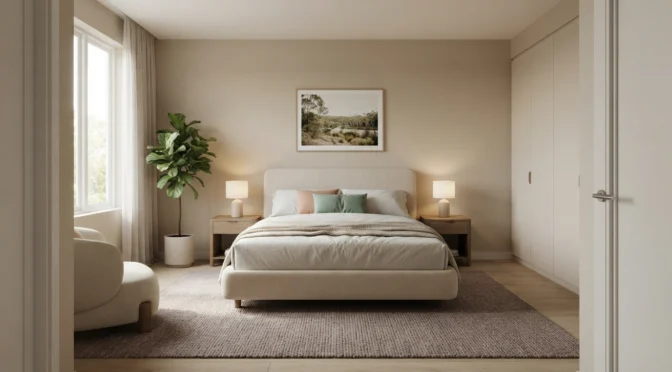
The position of your bed can change the entire feeling of a bedroom. A room may have beautiful furniture, soft lighting and an elegant colour palette, yet still feel uncomfortable if the layout creates awkward movement or leaves the bed in an exposed position.
The 3 best feng shui bedroom layouts focus on creating a sense of stability, balance and ease. While every bedroom has different dimensions, windows and doors, these three arrangements provide practical starting points for large bedrooms, compact rooms and spaces where the ideal bed position simply is not possible.
1. The Command Position Bedroom Layout

The command position is one of the most widely recognised ideas in feng shui bedroom planning.
In this arrangement, the bed is positioned so that you can see the bedroom door while lying down, without being directly in line with it. Ideally, the bed sits diagonally across from the entrance with a solid wall supporting the headboard.
This layout can create a greater sense of comfort because the entrance remains visible without dominating the view from the bed.
For the best result:
- Place the headboard against a solid wall.
- Keep enough space to move around both sides of the bed.
- Avoid positioning the bed directly opposite the door.
- Use a substantial headboard to visually anchor the sleeping area.
- Keep the route from the entrance to the bed clear.
If the room allows it, this is often the strongest starting point because it combines practical circulation with a visually grounded arrangement.
However, not every bedroom has a perfect wall available. Windows, fitted wardrobes and en-suite doors can all affect where the bed can realistically sit. In those situations, the goal should be to get as close to the principle as the architecture allows rather than forcing an impractical arrangement.
2. The Balanced Symmetry Bedroom Layout
The second of the 3 best feng shui bedroom layouts is centred around visual balance.
Here, the bed becomes the clear focal point of the room, with space on both sides. Matching or visually balanced bedside tables and lighting can create a calm, intentional composition.
The furniture does not need to be perfectly identical. A room can still feel balanced when the pieces have similar visual weight, height or proportions.
This layout works particularly well in master bedrooms where two people share the space. Easy access from both sides prevents one person from feeling squeezed against a wall and improves everyday practicality.
Consider including:
- A bedside surface on each side.
- Soft lighting for both sides of the bed.
- A rug large enough to visually anchor the sleeping area.
- Storage positioned away from narrow circulation routes.
- Artwork centred in relation to the bed.
Symmetry can make a bedroom feel calmer, but avoid making the space overly formal. Natural materials, varied textures and personal objects can prevent the room from feeling like a hotel.
3. The Small Bedroom Feng Shui Layout
Small bedrooms rarely allow every ideal feng shui recommendation to be followed. The challenge is to create a sense of calm without sacrificing the storage and furniture you genuinely need.
Start with the bed, as it is usually the largest object in the room. Position it where it creates the clearest route between the entrance, wardrobe and windows.
If placing the bed against one wall is unavoidable, prioritise comfortable access and avoid filling the remaining floor space with unnecessary furniture.
For a small bedroom:
- Choose furniture that suits the scale of the room.
- Use wall-mounted lights instead of large bedside lamps.
- Keep storage visually simple.
- Avoid blocking windows with tall furniture.
- Use the space beneath the bed thoughtfully.
- Keep the entrance as open as possible.
A compact bedroom benefits from fewer, better-considered pieces. Too much furniture can interrupt movement and make the room feel smaller than it actually is.
What If Your Bed Has to Face the Door?
Sometimes the architecture of a bedroom leaves very few alternatives.
If your bed must face the entrance, you do not need to redesign the entire room. A bench or low piece of furniture at the foot of the bed can create a subtle visual boundary, provided it does not make movement difficult.
The most important consideration is whether the room feels comfortable and functions properly.
Feng shui should support the way you live rather than make a bedroom inconvenient.
Should a Bed Go Under a Window?
A solid wall behind the headboard is generally preferred, but a bed beneath a window may be the most practical option in some rooms.
If this arrangement cannot be avoided, use a strong headboard and make sure curtains or blinds are easy to operate. Avoid placing the bed where opening windows becomes difficult.
Good interior design often involves balancing ideal principles with the reality of the architecture.
Common Feng Shui Bedroom Layout Mistakes
Regardless of which layout you choose, certain arrangements can make a bedroom feel less restful.
Try to avoid:
- Overcrowding the room with furniture.
- Blocking the natural route from the door.
- Positioning sharp furniture corners close to the bed.
- Filling the sleeping area with work equipment.
- Using too many mirrors around the bed.
- Allowing clutter to collect on every visible surface.
A restful bedroom does not need to be completely minimal. It simply needs enough visual and physical space to feel comfortable.
Choose the Layout That Works for Your Room
The 3 best feng shui bedroom layouts are not strict templates that every home must follow. They are starting points for thinking more carefully about bed position, movement, balance and the overall atmosphere of a bedroom.
At Oraanj Interiors, we believe successful residential design begins with understanding how a room is actually used. A bedroom should feel comfortable when you enter, practical during everyday routines and restful at the end of the day.
Start with the architecture you already have, position the bed thoughtfully and remove anything that makes the room unnecessarily difficult to move through.
Want to bring the same sense of balance into the rest of your home? Check out ourfeng shui living room ideas for practical advice on furniture arrangement, lighting, natural materials and creating a more welcoming living space.

