


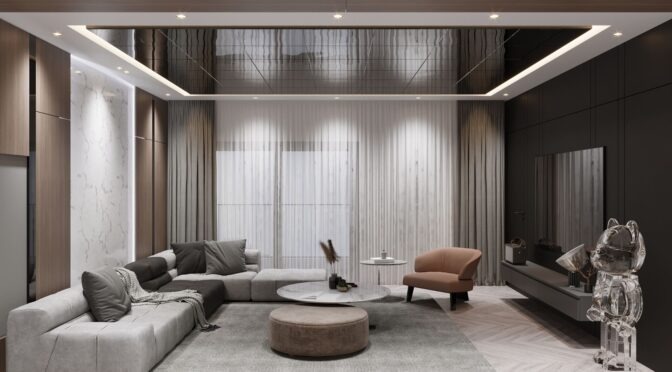
Let’s be honest: the lounge is where life actually happens. The kitchen might be the “heart” of the home for cooking, but the lounge is the soul. It’s where you host friends for wine on a Friday, where you binge-watch your favorite series on a rainy Sunday, and where you collapse after a long, exhausting week. It is the backdrop for Christmas mornings and lazy afternoons.
However, finding the sweet spot between a magazine-ready aesthetic and a room that’s actually comfortable to live in is much tougher than it looks. We’ve all been there, buying a chair because it looked amazing on Instagram, only to realize it’s uncomfortable to sit in for more than ten minutes, or painting a wall a trendy color that feels oppressive once the sun goes down.
This is where understanding the fundamentals of Lounge room interior design makes all the difference. It isn’t just about buying nice things; it’s about psychology, spatial awareness, and understanding how a human body moves through a room. Whether you’re working with a sprawling open-plan space or a cozy apartment nook, you don’t need a total renovation to fix the vibe. You just need to style it with intention.
Read the Room First: The “Bones” of the Space
Before you buy a single throw pillow or browse a furniture sale, stop. Take a hard look at the “bones” of your space. Ignore the trends for a moment and look at the logistics. A great room starts with a realistic assessment of what you have.
The Light Quality
Watch how the sun moves through the room over 24 hours. A paint color that looks crisp and white in the morning might turn a muddy grey in the afternoon shadow. A dark corner might be useless for reading but perfect for a cozy, moody media setup. If you have a north-facing room (or south-facing if you are in the southern hemisphere) that gets little direct sun, don’t fight it by painting it stark white; it will just feel cold. Lean into it with richer, warmer tones.
The Traffic Flow
Walk through the room. Literally, walk the path you take from the hallway to the kitchen or the sofa. Do you have to dodge a coffee table to get to your seat? Do you find yourself shimmying past an armchair? If the physical path isn’t clear, the room will never feel relaxing, no matter how beautiful the furniture is. Your brain registers these micro-annoyances as stress.
The Realistic Purpose
Be brutally honest with yourself. If you have toddlers or a shedding dog, a white linen sofa is not a design choice; it’s a recipe for anxiety. Design for how you actually live, not just how you want the room to look. If you eat dinner in front of the TV, get a coffee table that lifts up or sturdy side tables, rather than delicate glass surfaces.
Mastering the Art of the Small Lounge
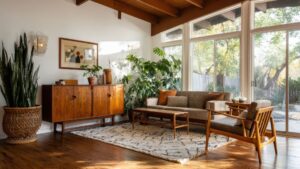
Tight quarters can be frustrating. You might feel limited by a lack of square footage, but smart small spaces interior design is all about tricking the eye. If you stop fighting the size and start working with it, these rooms often become the most character-filled spots in the house. The goal isn’t to make it look like a palace; it’s to make it feel like a jewel box.
Leggy Furniture
This is the oldest trick in the designer’s book because it works. Pick sofas, armchairs, and sideboards that are raised on legs. Being able to see the floor continuously underneath the furniture convinces your brain that the room is bigger than it really is. Boxy furniture that sits flush against the floor blocks that visual line, making the room feel heavier and more crowded.
Double Duty Functionality
In a tight spot, everything needs to earn its keep. There is no room for passengers. An ottoman shouldn’t just be a footrest; it should open up to store blankets. A side table might need to nest so it can be expanded when guests come over.
Go Vertical
If you can’t build out, build up. We often ignore the top half of our walls. Tall bookcases that go nearly to the ceiling draw the eye upward, highlighting ceiling height rather than limited floor space. This verticality creates a sense of grandeur even in a tiny footprint.
The Modern Look (Without the Coldness)
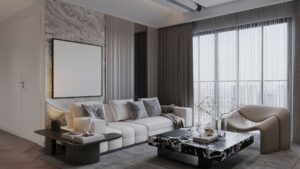
Modern design often gets a bad rap for feeling sterile or clinical, like a doctor’s waiting room rather than a home. But “contemporary” doesn’t have to mean “uninviting.” When you look at the best Modern Living Room Ideas, you’ll notice the secret is usually in the mix of materials. It’s about clean lines, yes, but softened with organic touches.
Texture is Everything
This is especially true if you love a neutral palette. A room that is all beige can easily look flat and boring. Exploring professional Beige Room Decorating Ideas can show you how to layer tones effectively so the room feels rich, not washed out. The trick is contrast in feel, not just color. Think about placing a velvet sofa against a rough jute rug, or a smooth glass coffee table paired with a chunky knit throw and a raw timber side table. The friction between rough and smooth, matte and shiny, is what makes a neutral room feel expensive.
Hide the Tech
Nothing kills a modern vibe faster than a tangle of HDMI cables or a router blinking in the corner. “Modern” implies sleekness. Use cable management systems or media units that conceal the “ugly” parts of modern life while keeping the TV accessible. The TV shouldn’t be the altar of the living room; try to integrate it into a gallery wall or buy a model that displays art when turned off.
The Layout & The Palette
How you arrange the room dictates how it feels socially. A common mistake is pushing all furniture against the walls to “create space.” Ironically, this usually leaves a weird “dead zone” in the middle of the room that no one uses, making the conversation distance awkward.
Try “floating” your sofa off the wall, even just a few inches, or pulling armchairs in to create a cozy conversation circle. You want people to be able to talk without shouting across a dance floor.
When it comes to color, if you are struggling to find balance, stick to the 60-30-10 rule to keep it cohesive:
- 60% is your main color (walls, large rugs, maybe the sofa).
- 30% is your secondary color (curtains, accent chairs, painted joinery).
- 10% is your accent (cushions, art, vases, metals).
The Finishing Touches: Lighting and Life
Accessories are the difference between a “house” and a “home.” They are the layer that tells your story.
Lighting Layers
Never, ever rely on just the “big light” in the ceiling (the “grid” light). It flattens features and kills the mood. You need three layers:
- Ambient: The general light (dimmable ceiling lights).
- Task: Light for doing things (a reading lamp by the armchair).
- Accent: Light for mood (a small lamp on a bookshelf, strip lighting behind the TV, or candles).
4. Warm lighting (2700K to 3000K bulbs) mimics the sunset and signals to your brain that it is time to relax.
Greenery
Plants literally breathe life into a room. They add an organic, unpredictable shape to a room full of square corners. A tall fiddle leaf fig fills an empty corner perfectly, while trailing pothos softens sharp shelving lines. If you kill plants, high-quality faux branches in a ceramic vase can do the trick, too.
Personal Artifacts
This is where you break the rules. Display things that matter to you. A stack of books you’ve actually read (not just bought for the cover color) or a souvenir from a trip beats generic store-bought decor every time. A home should look like you, not a catalog.
Common Pitfalls to Avoid
Even with the best intentions, it’s easy to stumble. Watch out for these traps:
- Overcrowding: Leave breathing room. “Negative space” (empty space) is just as important as the furniture. It gives the eye a place to rest.
- The “Matchy-Matchy” Trap: Don’t buy the entire bedroom set or the matching coffee table, side table, and TV unit. It looks generic. Mix woods and metals to make the space feel curated over time.
- Ignoring Storage: Clutter is the enemy of style. If you don’t have a place to put the remote, magazines, and kids’ toys, the design will fall apart in a week. Plan for “mess” by having baskets and drawers ready to hide it.
Creating a lounge you love isn’t about following a strict set of rules or copying a specific trend that will be out of style next year. It’s about solving problems creatively. Focus on comfort first, layer in your personality through textures and art, and the style will naturally follow.
Looking for professional guidance to bring your vision to life? Contact Oraanj Interior Design to get started.


