


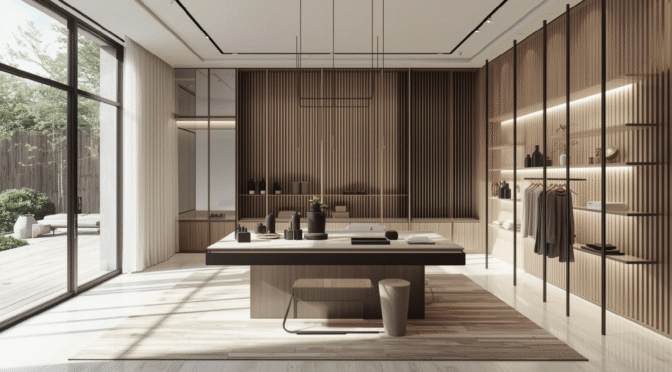
First of all, first impressions matter, of course, when it comes to interior design in the retail environment. Well-designed retail spaces can enhance your merchandise, but beyond that, your brand story, your brand’s narrative, can make an impression, create an impression, and bring customers back.
In competitive retail markets like London, well-considered retail interiors, sometimes designed by experienced London Interior Designers, have an important role to play in helping brands differentiate themselves while remaining simple, usable, and welcoming. In case you’re running low on ideas, here are some retail interior decoration tips that would turn your store into a shopper’s paradise.
Why Retail Interior Design Matters?
Have you ever entered a store and immediately felt like you belonged there? That is the power of well-thought-out interior design. Quality design goes far beyond mere style; it is a plan of action aimed at ensuring greater customer traffic, client satisfaction, and ultimately, enhanced sales figures. When designing your store or coming up with store design ideas, it is important to create a space that embodies your brand.
Such issues are often addressed by more established studios that have a retail focus through carefully thought-out Space Planning, which considers every square meter in support of both customer flow and commercial performance.
Know Your Brand and Audience
Before you get into the design details, take time to brainstorm your brand and audience. Are you working with minimalist fans or people who like bold, eclectic designs? Your boutique interior design should be a reflection of your brand’s personality and speak directly to your customers.
What do you want customers to feel in your store?
What colours and materials best represent your brand?
How do your products influence the layout and design?
A boutique that deals in handmade jewellery, for example, will do very well in a subtle, beautiful environment; a shop selling sneakers may like to be bolder and more dynamic in layout.
Others explore concepts similar to a Feng Shui Consultation by looking for balance, circulation, and intuitive movement to create a shopping experience that flows much
Retail Interior Design Ideas to Take Your Space to the Next Level
Now, let’s take you through some practical ideas to help you build a successful retail space:
Build an Attractive Storefront
Your storefront is the face of your brand. Your goal should be to invest in attractive signage, enticing window displays, and lighting to entice window shoppers. An attractive, artistic, and product-oriented window display can do wonders, especially when guided by a well-thought-out layout plan and elevations to ensure visual balance and brand consistency.
Pro Tip: Rotate your displays from time to time to keep your store fresh and up-to-date for different seasons. This ensures you have repeat customers and have a lively atmosphere in your store.
Maximise the Use of Lighting
Lighting can make or break a room or setting. This can be achieved using the combination of ambient lighting, task lighting, and accent lighting to draw the eye to important areas and merchandise. For example, lighting around display tables creates focal points in a room, and LED lights can be used instead of modern accessories.
Did you know that warm lighting can give your store a cosy effect, while cool lighting can give a minimalist interior design a modern look. Blend your colours according to your perfect match.
Professional lighting design encompasses not only brightness, but also interactions between light and materials, colours, and customer dwell times throughout the day.
Optimise the Layout
Customers experience nightmares when seeing cluttered stores. Organise layout designs that would easily direct them. Some of these include:
- Grid Layout: This type of layout works well in the display of a host of products in a broad showcase.
- Free-Flow Layout: This type is most suitable to use in boutiques that would like to appear laid-back and exploratory.
- Loop Layout: For encouraging more walk-ins on the entire floor of the selling space.
The whole plan should not forget that access features matter as well. Large aisles coupled with clear headings ensure even more convenience and pleasant shopping experiences for most people.
Where there are better avenues of visibility, there tends to be reduced shopper fatigue and therefore greater dwell time.
Play Around with Colours and Texture
Colours trigger emotions, and textures provide a third dimension to space, and the colour scheme of your brand can also be defined through a combination of the three in wood, metal, or even fabric that offers aesthetic effects to space. Neutrals should be pleasing and elegant, and bold colours will electrify space.
Nor should you be hesitant to play around with patterns, whether geometric, floral, or abstract prints, since the patterns by which they are coloured contribute to the designs on your furniture.
An intelligent Colour Consultation assists in maintaining colour consistency when viewed from different angles with various lighting conditions.
Apply Smart Storage Solutions
Storage need not be boring. Utilise open shelving, highly sophisticated cabinets, and wall hooks. Functional furniture will be able to take advantage of the highest use of space constraints.
Areas that can be used to hide clutter include under the display table, through a storage drawer or using foldable fixtures.
Add Statement Pieces
It could be a statement piece as simple as an oversized mirror, art installation, or even a customised counter. These would make your store stand out and be more than just visually pleasing, but also talk-worthy.
Add Technology
The use of interactive screens, digital price tags, and cashless payment services will not only give your store an updated makeover but it will also enhance the shopping experience. I would recommend that you install kiosks that will allow your customers to view your catalogue or place orders while in the store.
Furthermore, smart technology is also useful for inventory control and customer information gathering.
Store Decor Ideas on a Budget
You don’t have to empty your wallet to transform your store. Here are the best budget-friendly tips:
DIY Displays: Use crates, pallets, and ladders for unique displays.
Paint Walls: A paint job can give your rooms a complete facelift. Change your furniture’s location.
Thrifted Finds: A vintage piece of furniture or home decor can go a long way in adding some personality without breaking the bank.
Plants: Adding plants is inexpensive and helps add personality to a space.
Mirrors: Apart from enlarging small spaces, mirrors can reflect light effectively.
Running the store on a shoestring budget? Collaborate with local artists, where they get a chance to showcase their artwork in your store’s decoration. Win-win for both sides, right?
Boutique Interior Design: Adding the Personal Touch
“Boutiques are all about charm and character,” says Harper’s Bazaar editor, Franca Sozzani. “Here’s how you add a personal touch to your boutique
Thematic Interiors: Designing interiors based on a theme, be it bohemian chic, modern luxury, or anything else.
Custom Fixtures: One-of-a-kind shelving or counter installations designed to match your brand.
Personalised Signage: Personalise your logo and brand identity in decorations.
Customer Comfort Zones: Provide a cosy sitting area to encourage lingering.
Never underestimate the power of sensory design. A perfume or music can be all it takes to make a memorable shopping experience.
Retail Design Trends to Watch in 2026
Keep yourself on top of the curve and far ahead of all your competitors. Here are some names you need to follow:
Sustainability
– Use reclaimed wood
– Use energy-saving bulbs
Biophilic Design: Add natural components such as the living wall and plants.
Experiential Spaces: Provide space to organise workshops, demos, and interactive displays.
HybridStores: Where shopping is accompanied by cafes, studios, and community facilities.
AR: Customers are able to see products at home through the use of an AR application, either at home or through store installation.
Organise customer behaviour and build on it. AR push forces customers back to authenticity and storytelling in the physical retail environment. Design to connect with your customer base in meaningful, relevant, and impactful ways.
Putting It All Together
The design of retail space is not just about bringing in the best concepts and paying attention to the details. It is about blending the best of both worlds, creative and strategic, to leave your mark on your customers. The best method to incorporate this in your boutique interior design is to focus on the reflection of your interior design and the intelligent design ideas.
Oraanj is a award-winning Interior Design Studio in London and provides a Full Service to ensure retail spaces are both commercially successful and visually lasting through concept, layout, and detail alignment.


