


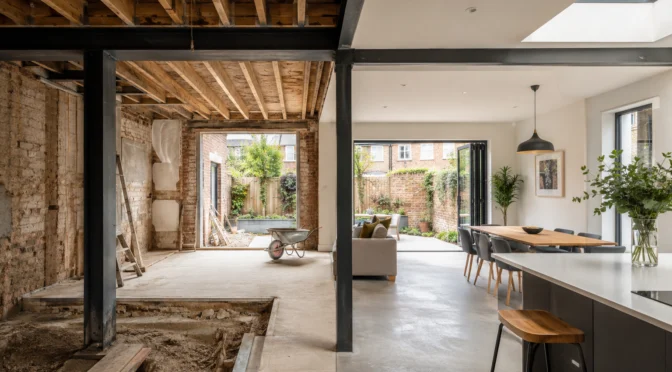
Undertaking a major property renovation or structural alteration in London is an exciting journey, but it is also one filled with unique complexities. From navigating strict local conservation area guidelines to managing complex party wall agreements and maximizing space in narrow terraced houses, the execution strategy you choose matters.
When planning a project, homeowners typically face a crucial decision between two different project management routes: the unified Design & Build method, and the multi-party Traditional Contracting path. Understanding how these two models operate in the context of the London property market can help you save time, manage costs, and reduce stress.
Understanding the Design & Build Approach

In a Design & Build model, the design, architectural planning, and physical construction are all handled by a single entity. From the initial layout sketches to the final structural support installation, one integrated team coordinates the entire lifecycle of the project.
This streamlined structure simplifies communication and can significantly reduce the risk of unexpected budget inflation. If you are looking for a unified workflow where the designers and construction specialists work side-by-side, collaborating with an integrated design and build company in London offers a highly coordinated approach. It helps ensure that the architectural vision remains fully aligned with the practical, real-world construction budget right from day one, minimizing potential delays during complex structural phases.
Understanding the Traditional Contracting Route
Traditional contracting splits your renovation into distinct, separate phases. First, you hire an independent architect or a specialist interior design company to draft detailed plans, obtain planning permissions, and specify structural details.
Once those plans are fully finalized, the project is put out to tender. You then select a separate main contractor to execute the drawings.
The primary benefit of this system is that it establishes independent checks and balances; your designer acts as an advocate to ensure the contractor builds exactly what was drawn. However, if structural discrepancies or design gaps are discovered midway through the physical construction, it can sometimes lead to disputes between the architect and the contractor over who is responsible for the associated cost variations.
Key Comparisons for London Renovations

When evaluating these methods for London properties, consider three critical factors:
-
Cost Predictability: In a Design & Build framework, the construction team is involved early to provide accurate pricing during the design phase. With traditional contracting, designs are sometimes drawn up without real-time builder feedback, which can lead to costly revisions if tender bids come back higher than expected.
-
Timeline Efficiency: Because the construction and design teams belong to the same organization, certain pre-construction tasks, structural calculations, and material procurement can begin much earlier. Traditional projects must wait until the entire design and tender process is fully completed before a contractor is appointed.
-
Problem Resolution: Historic London properties frequently present unexpected structural surprises behind old plaster or under floorboards. A unified team can resolve these issues internally and swiftly. In contrast, the traditional route requires formal back-and-forth communication between your independent designer and builder to agree on a solution.
Which Option is Right for Your Project?
Ultimately, the best choice depends on how much time you want to spend managing separate parties. If you prefer a highly customized process where you can work closely with an independent interior designer in London to handpick every aesthetic finish before putting the plans out to competitive tender, traditional contracting remains a widely used option.
However, if you want a single point of responsibility, a consolidated timeline, and a highly collaborative framework designed to handle the fast-paced nature of urban construction, the integrated Design & Build route is often the more practical path.

