


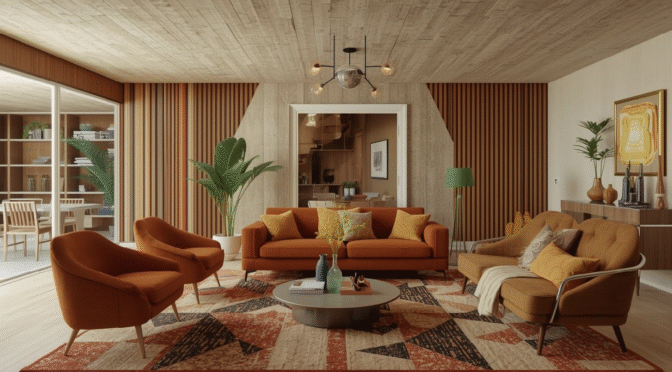
The 1970s were a turning point in interior design, marking a decade of individualism and self-expression. The use of warm colours and nature-inspired themes marked the interior design of this era. Natural elements such as plants and hand-made interior furnishing products are also common in the interior design of the 1970s.
Why it is so relevant today is that it mirrors so perfectly our newly found ideals: wellness, self-expression, and careful use of space. It is no surprise that Interior Designers in London are harking back to 1970s design as more than just a retro nod, but as a useful starting point for designing homes that feel earthy, expressive, and lived in.
In Oraanj Interiors, we believe that more than a trend, the revival of interior design in the 1970s is a source of endless inspiration. This is a closer look at how interior designs in the 1970s became so iconic, as well as how you might infuse them in a modern home.
The Social Mood Behind the Style
Design is not done in a complete void. The 1970s were a period of cultural evolution that was defined by “the back to nature movement, artistry, and a desire for a bohemian lifestyle.” Consequently, homes evolved to be a statement of freedom and comfort rather than mere formality.
People were moving away from the strict modernism of mid-century design and embracing mixtures of styles and materials, and having fun with bold statements of design, often revisiting earlier influences such as art deco interior design for its glamour and expressive detailing. This was not just furniture, it was a statement – and a statement that has as much relevance in modern times as it did in those times.
For my own project experience, customers are increasingly seeking this aspect of space—an emotional dwelling that is more relaxed than a show-home designed. Not surprisingly, this reflects a response to a growing need from Luxury Interior Designers working in London to move beyond show-home perfection and instead create interior designs which facilitate living, creativity, and relaxation.
Design Hallmarks of the 1970s
We’ve mentioned the basics: earthy colours, textured finishes, and graphic prints, but let’s examine some other specifics that made up what was such a distinct era.
1. Wall Panelling & Statement Ceilings
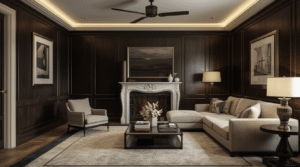
Wood wall panels, particularly those in darker wood tones, were very popular in the ’70s. However, wood-clad walls and ceilings are currently being incorporated again in design as an effective means of adding warmth to spaces.
Try it: Try incorporating vertical wooden slats or walnut panelling in a home office or entry way for a contemporary twist on a classic from another era.
Thoughtful space planning is the answer here, and panelling looks best when it’s playing a proportional, rather than dominant, role. Partial-height panelling or ceiling treatments are a good way to allude to the period in smaller London houses, without making them feel smaller.
2. Conversation Pits & Modular Seating
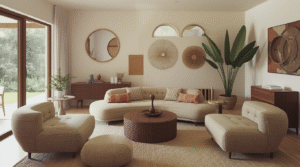
The socialising of the 1970s was relaxed and cosy. There were “conversation pits” in homes, sunken areas of the living room that encouraged conversation.
Modern revamp: Repurpose this concept using large and low-profile sectional sofas and area rugs to demarcate an enclosed space for an intimate seating area in an open-plan living space.
Such architecture also benefits Contemporary Lighting Design. Less seating is naturally accompanied by warmer light sources and contributes to recreating a warm ambience that makes these areas very attractive to people.
3. Curves, Arches, & Organic Shapes
The ’70s were all about rejecting defined lines and embracing curves and fluidity. This included the design of furniture and architectural details.
Embody the feeling: Use rounded sofas, arched mirrors, scalloped-edge decorations, or wall cutouts in the shape of crescents to incorporate this natural design aesthetic in your design project.
Several Interior Design Studios in London are now embracing curves as a means of countering and offsetting more linear architecture—a very effective means of optimising flow and comfort.
Room-by-Room: Bringing the 1970s Into Your Home
Here is how to decode this timeless period in various contexts and areas within a house to avoid falling into the category of kitsch.
Living Room
Opt for deep, earthy hues, warm woods, rust-coloured upholstery, and lush textiles.
Layered lighting: floor lamps, table lamps, and dimmed overhead lighting all add to the ‘70s vibe. Mix materials: velvet cushions on a leather sofa, a brass coffee table with a terrazzo top.
A soft Colour Consultation refines these palettes for modern living, ensuring warmth sans heaviness, a concern particularly in north-facing rooms common in period London properties.
Kitchen & Dining Area
Retro tiles, such as checkerboard geometric tiles or sellige -style, add character to a splashback or floor.
Specify natural wood cabinetry or coloured laminate fronts for a playfully retro look. Match a tulip table with mismatched vintage chairs for that low-key, eclectic look. From subtle soning through floor or ceiling treatment inspired by the 1970s to open-plan layouts, a method we often use during early-stage Space Planning.
Bedroom
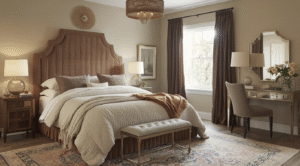
Layered textures create a warm and cocooning atmosphere: quilted bedspreads, woven throws, and tactile headboards. Add mood lighting with globe bedside lamps or rattan pendants. Add a touch of glamour with a mirrored or brass-trimmed dressing table.
Bathroom
Terracotta or avocado green tiles? Yes, really—when used thoughtfully. Retro patterns in small doses, like a feature wall or shower niche, can make quite a statement. Vintage-style vanities and free-standing tubs are a sure way to add luxury with a retro touch.
Constrained by the plumbing of existing buildings, careful planning can elevate these retro elements into feeling intentional rather than decorative, something a full-service design approach naturally supports.
Sustainability & Vintage Finds
Among the most appealing factors supporting the adoption of 1970s interior design is its compatibility with living sustainably. Some of the original elements from that era that are readily accessible include teak furniture, ceramic lamps, and rattan chairs.
Oraanj Interior’s belief is to combine the old and new. This is because mixing old furniture with new furniture adds elegance to your room and gives the old furniture a new life.
This philosophy relates to other holistic design philosophies, such as Feng Shui Consultation, in which balance, texture, and the energy of much-loved objects are influential in determining the feeling of one’s dwelling.
Bringing It All Together
What it means to have a 1970s-inspired space is certainly not the creation of a time capsule. What is meant is the creation of a space which is warm, earthy, and unique to its owner. This is the recognition of the importance of the past and the need to design for the present, and it is what the philosophy at Oraanj Interiors embodies.
As award-winning interior designers, we have witnessed the immense potential of creatively reinvented design periods in injecting added meaning to the spaces of a residence, especially in keeping with one’s lifestyle.
Whether you are building a new one or mixing in some retro elements, our design experts will be right there in your corner and guide you every step of the way, helping you attain the perfect mix of elegance and vintage elements.
Let’s Design Something Timeless
Ready to tap into the comfort, creativity, and charisma of 1970s design?
Whether it’s a room refresh or a complete home makeover, 1970s interior design styles have a great combination of both classic and modern elements. The team at Oraanj Interiors enjoys being able to assist in finding new ways of rediscovering different eras of design.


