


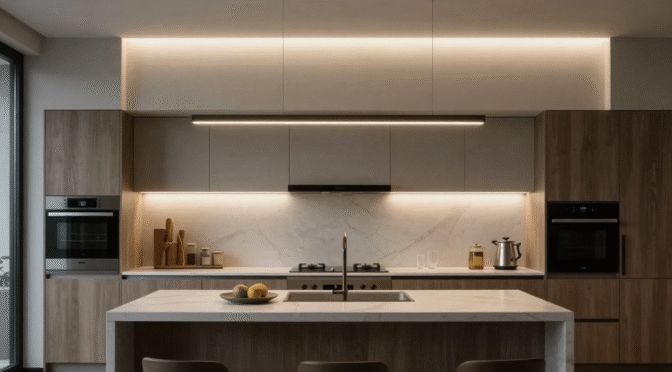
The right lighting can completely transform your kitchen — turning it from a purely functional space into the true heart of your home. More than any other room, the kitchen needs to balance practicality with atmosphere. It must support cooking, cleaning, working, dining, and socialising, often all within the same space.
In London homes, where kitchens frequently double as dining areas and social hubs, lighting plays a vital role in setting the mood, enhancing usability, and elevating the overall design. Thoughtfully planned Lighting Design ensures that every corner of the kitchen works efficiently while still feeling warm, welcoming, and visually cohesive. This approach reflects the core principles of Lighting Design London Homes: How to Create Warm & Functional Spaces, where illumination is carefully balanced to support both everyday tasks and relaxed, social living.
From modern pendant lights to subtle under-cabinet LEDs, the right choices can enhance both style and functionality. Whether you are planning a full Kitchen Interior Design project or refreshing an existing layout, these ten kitchen lighting ideas will help you create a space that feels beautiful, practical, and perfectly suited to modern living.
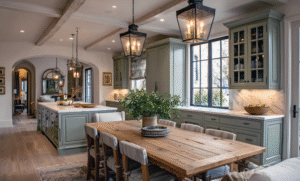
1 . Pendant Lights Over Kitchen Islands
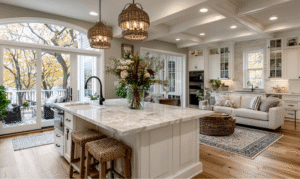
Pendant lights remain one of the most popular and effective lighting choices for kitchens with islands or breakfast bars. They provide focused task lighting for food preparation while also acting as strong visual features within the space.
In contemporary kitchens, bold oversized pendants can create a dramatic focal point, while slimline or glass pendants suit minimalist interiors. Choosing finishes that complement cabinetry, worktops, or hardware helps tie the entire design together. Varying the height or spacing of pendants can add depth and rhythm without overwhelming the space.
Well-positioned pendants also help define the island as a central social zone, reinforcing the kitchen’s role as a place to gather.
2 . Layered Lighting for Functionality
A single ceiling light is rarely sufficient for a modern kitchen. Layered lighting — combining ambient, task, and accent lighting — creates a balanced environment that adapts to different activities throughout the day.
Ambient lighting provides overall illumination, task lighting focuses on work areas such as counters and sinks, and accent lighting adds visual interest and atmosphere. A layered approach ensures there are no dark corners and that each zone functions properly.
This type of planning is a core principle of Interior Architecture, where lighting is considered alongside layout, circulation, and spatial hierarchy rather than being added as an afterthought.
3 . Under-Cabinet LED Strips
Under-cabinet lighting is one of the most practical and visually effective upgrades you can make in a kitchen. By illuminating worktops directly, it eliminates shadows created by overhead lights and improves safety and precision when preparing food.
Modern LED strips are discreet, energy-efficient, and available in a range of colour temperatures. Dimmable options allow you to switch between bright, cool light for cooking and softer, warmer tones for evenings. Integrated correctly, under-cabinet lighting adds a subtle glow that enhances materials such as stone, quartz, or timber surfaces.
Careful detailing at this stage is often supported by Technical CAD Drawings, ensuring precise placement and seamless integration into cabinetry.
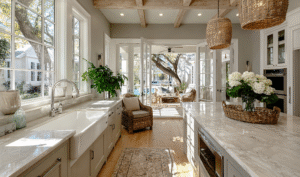
7. Maximise Natural Light
No artificial lighting can replicate the warmth and quality of natural daylight. Kitchens that benefit from large windows, skylights, or glazed doors instantly feel more open, healthy, and inviting.
Where structural changes are possible, increasing natural light can dramatically improve both the look and energy efficiency of the kitchen. In homes where this is not feasible, reflective materials such as high-gloss cabinetry, mirrored splashbacks, and light-toned finishes help bounce daylight deeper into the space.
Thoughtful layout planning ensures that work zones are positioned to take full advantage of available natural light throughout the day.
5. Recessed Ceiling Lights
For kitchens that favour clean lines and understated elegance, recessed ceiling lights (also known as spotlights) offer a minimalist solution. They provide even illumination without drawing attention away from the overall design.
Strategic placement is key. Spotlights should be positioned above worktops, sinks, and circulation areas rather than randomly across the ceiling. Dimmable recessed lights add flexibility, allowing the kitchen to transition easily from bright task lighting during the day to a softer ambience in the evening.
Coordination between lighting and electrical layouts is often resolved through M&E Electrical AutoCAD Drawings, ensuring accuracy and compliance while maintaining a refined aesthetic.
6. Statement Chandeliers
Chandeliers are no longer reserved for formal dining rooms. In open-plan kitchens, a statement chandelier can add personality, drama, and a sense of luxury.
Whether industrial, sculptural, or classic, a chandelier works best when placed above a dining table or island where it becomes a focal point without obstructing movement. The scale of the fixture should be carefully considered to suit ceiling height and room proportions.
This contrast between functional kitchen elements and decorative lighting creates a layered, design-led interior that feels both practical and expressive.
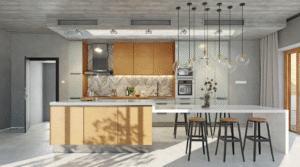
7. Accent Lighting for Display Areas
Accent lighting adds depth and visual richness by highlighting specific features within the kitchen. Open shelving, glass-fronted cabinets, textured splashbacks, and architectural details all benefit from subtle illumination.
Internal cabinet lighting not only enhances display areas but also adds a soft glow during evenings, making the kitchen feel warm and inviting even when task lighting is dimmed. LED strips integrated into shelving or recessed niches can elevate the overall look without overwhelming the space.
These small details often make the difference between a standard kitchen and one that feels thoughtfully designed.
8 . Dimmable Lighting for Flexibility
Installing dimmer switches is a simple yet highly effective way to improve kitchen lighting. Dimming allows you to adjust brightness levels depending on the time of day and activity, creating a more adaptable environment.
Bright lighting supports cooking and cleaning, while softer settings suit relaxed meals or entertaining guests. Dimmers also contribute to energy efficiency by reducing power usage when full brightness is unnecessary.
During a Colour Consultation, lighting levels are often considered alongside wall colours and finishes, as light intensity significantly affects how colours are perceived.
9 . Lighting for Cottage-Style Kitchens
Traditional and cottage-style kitchens benefit from warm, characterful lighting that enhances natural materials such as wood, stone, and handmade tiles.
Vintage pendants, lantern-style fixtures, and soft wall sconces complement these spaces beautifully. Warm-toned bulbs help maintain a cosy atmosphere, while layered lighting ensures the kitchen remains functional.
Combining decorative lighting with discreet modern solutions ensures that traditional kitchens meet contemporary living needs without losing their charm.
10 . Innovative Smart Lighting
Smart lighting systems offer modern convenience and control, allowing homeowners to adjust brightness, colour temperature, and schedules via smartphone apps or voice assistants.
This technology is ideal for busy London households, enabling lights to adapt automatically throughout the day. Morning settings can be bright and energising, while evenings transition into warmer, calmer tones.
Before installation, visualising lighting scenarios through 3D Render Services helps homeowners understand how different settings will look and feel, making design decisions more confident and informed.
Conclusion


