


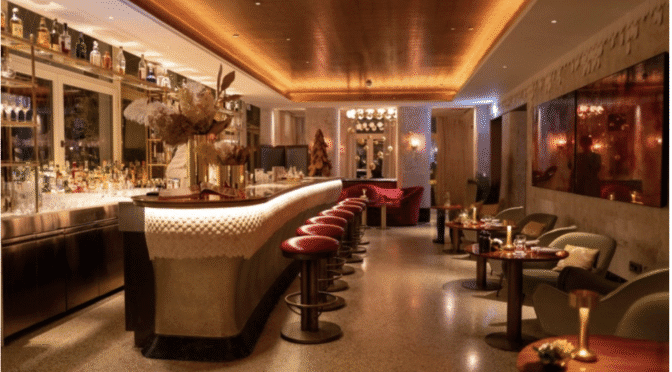
Most bar owners think about layout in terms of covers: how many seats can we fit? But the most commercially successful venues approach things differently. When you understand the core principles of commercial interior design, you start to ask better questions: how does this space move people, encourage spending, and allow staff to operate at peak efficiency? Those questions produce very different answers and significantly better revenue outcomes. If you are wondering what makes a bar worth visiting, it often comes down to this invisible framework.
Why Is the Counter Considered the Engine of Your Bar?

Everything in a bar flows from the counter position. A poorly placed bar counter creates blind spots for staff, forces customers to wait unnecessarily, and disrupts the natural movement of the room. On the other hand, a well-placed counter gives staff clear sightlines across the whole space, creates a natural focal point, and makes ordering feel effortless.
The counter itself should be designed entirely around the workflow of the people behind it. Ice wells, glass storage, POS terminals, speed rails, and refrigeration all need to be within arm’s reach of where each bartender works. Wasted steps behind the bar cost seconds per drink, and seconds per drink cost hundreds of covers a night.
How Does Your Seating Mix Drive Spend Per Head?

The most profitable bar seating configurations mix high stools at the counter, booth or banquette seating along walls, and some loose tables. Each serves a completely different customer: the bar stool encourages solo drinkers and people who want interaction; the booth creates privacy for groups who want to linger; the loose table is flexible for different party sizes.
Customers in booths consistently spend more and stay longer than those at loose tables. The sense of enclosure creates comfort and reduces the social pressure to leave. Opting for Bespoke joinery design, fitted banquette seating with built-in storage and considered upholstery- produces this effect far more effectively than off-the-shelf furniture.
How Can You Identify and Eliminate Dead Space?

Every bar has areas that customers actively avoid: the seat directly next to the toilets, the table in the draughty corner by the door, or the high-top that’s too close to the speaker. Good layout design minimises these zones or finds creative ways to make them desirable. You might introduce a DJ booth, a feature installation, or a private table that feels intentionally secluded rather than accidentally overlooked. This is exactly what spatial design is and why it matters in a successful hospitality setting.
Why Does Flow Matter Just as Much as Capacity?

A bar that feels chaotic drives customers to leave earlier than they otherwise would. Congestion at the counter, unclear sightlines to menus, and awkward paths between tables all create friction that registers emotionally, even if customers cannot name it. Professional Bar interior design should resolve these flow problems before they ever become service problems.
The entry sequence is particularly important. Customers who walk in and immediately feel welcomed and oriented are more likely to stay. Those who walk in and feel confused about where to go often turn around and leave.
How Can Light and Acoustic Zoning Change the Mood?
Different areas of a bar can be made to feel entirely different through lighting and acoustics alone, without any structural changes. A dimmer, warmer zone at the back feels intimate and encourages lingering, while brighter, livelier lighting near the counter encourages turnover at peak times. Strategic acoustic treatment prevents the cacophony that empties bars faster than bad service.
How Should You Plan Your Next Bar Layout?
If you’re planning a new bar or rethinking an existing one in London, speak to our team about how layout design can be built into the project from the start, rather than corrected after opening. Getting it right from day one will save you money and keep your guests coming back.

