


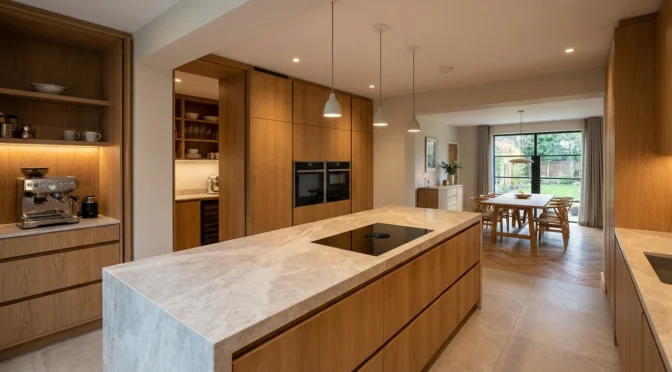
A kitchen renovation often begins with saved images, colour samples and ideas about new worktops. But why do some kitchens feel truly successful years later while others don’t? They work because the layout supports everyday routines, storage has been planned around real belongings, and the kitchen connects naturally with the rest of the home.
Choosing a kitchen renovation company in London should therefore involve more than comparing portfolios and quotations. The right team should ask how you cook, where shopping bags are put down, whether several people use the kitchen at once and how the space needs to work when guests arrive. These questions may seem less exciting than choosing stone or cabinetry, but they often shape the success of the finished room.
Experienced kitchen renovators in London should also look beyond the kitchen itself. In many homes, particularly where the kitchen opens into a dining or living area, changing one zone affects everything around it. Lighting, flooring, furniture placement, sightlines and circulation all need to be considered together.
How Should You Determine What Your New Kitchen Actually Needs?

Before thinking about cabinet colours, observe your existing kitchen for a few days. Ask yourself: Where does clutter collect? Which cupboard is always difficult to reach? Do people cross the cooking area to get to the garden? Is the dining table blocking a natural route through the room?
These everyday frustrations provide more useful design information than a folder full of inspiration images.
What is the best way to start a practical brief? Write down the three biggest problems with your current space and the three things you want the new kitchen to make easier. This creates a solid foundation before aesthetic decisions begin.
Is an Open-Plan Kitchen Always the Best Choice?
Open-plan kitchens remain popular, especially in London homes where homeowners want to improve natural light and create more social living spaces. However, removing every wall is not always the best answer.
Why might a fully open layout cause issues? A completely open kitchen can introduce problems with noise, cooking smells and visual clutter. In some homes, a semi-open layout works better. Glazed partitions, wide openings, pocket doors or carefully positioned joinery can maintain a sense of connection while giving different areas more definition.
The best open-plan kitchen is not necessarily the largest. A compact layout with clear circulation can feel more comfortable than a huge room where the kitchen, dining table and sofa appear disconnected.
Why Should You Plan the Room in Zones Instead of Just the Traditional Triangle?
The classic kitchen triangle focuses on the sink, cooker and fridge. It remains useful, but modern kitchens often need much more flexibility.
What kind of zones should you think about creating?
- Food preparation
- Cooking
- Making tea and coffee
- Breakfast and casual dining
- Cleaning and recycling
- Pantry storage
- Entertaining
For example, a coffee station positioned away from the main cooking zone allows someone to make a drink without interrupting meal preparation. A pantry near the entrance can make unpacking groceries easier.
These small decisions rarely appear in lists of kitchen design trends, yet they have a much greater impact on daily life.
How Can You Make the Best Design Decisions for a Small Kitchen?
In a small kitchen, every design choice becomes more visible. Is adding more cabinets the answer? Not always.
Full-height storage can use vertical space efficiently, but too many wall units may make a narrow room feel enclosed. Open shelves can create breathing room, but only if you genuinely want to keep them organised.
Before adding storage, decide what actually needs to live in the kitchen. Items used daily should be easiest to reach, while occasional appliances can be stored higher up or within a dedicated pantry.
For a small open-plan kitchen, visual simplicity is equally important. Repeating a limited number of materials across cabinetry, flooring and adjoining furniture helps the room feel larger and more cohesive.
Why Is It Important to Plan Lighting Before Construction Begins?
Kitchen lighting should never be reduced to a grid of ceiling spotlights.
What makes a successful lighting scheme? It usually combines task lighting for preparation, ambient lighting for the wider room and decorative lighting that gives the space personality. Under-cabinet lighting can make worktops more practical, while pendants may help define an island or dining table.
In an open-plan kitchen, separate lighting circuits are particularly useful. The bright lighting needed while cooking may feel uncomfortable when the same space is being used for dinner or relaxing later in the evening.
How Do You Design a Kitchen to Feel Like Part of the Whole Home?
Our Sleek Modern Kitchen with Timeless Appeal in Reigate portfolio project reflects an approach we value at Oraanj Interiors: a kitchen should not feel like a showroom inserted into a home.
How can you achieve this balance? The materials, proportions and detailing need to respond to the wider interior. Cabinetry should work with the architecture, lighting should support different moments throughout the day, and finishes should still feel appropriate when viewed from adjoining spaces.
This is especially important in open-plan homes, where the kitchen may remain visible from the sofa, dining area or entrance.
How Should You Choose a Kitchen Renovation Company in London?

Look beyond polished photographs. Ask how the company approaches space planning, project coordination, lighting, material selection and construction.
What should a strong renovation team offer? They should be able to explain why a layout works, not simply show you how it looks. They should also identify potential problems before work begins and help you understand which decisions deserve more of your budget.
At Oraanj Interiors, we approach kitchens as part of the complete home. The goal is not simply to install new cabinetry, but to create a space that improves movement, storage, social interaction and everyday routines.
The best kitchen renovations are not designed for photographs alone. They are designed for busy mornings, quiet evenings, family meals, unexpected guests and everything that happens in between. When those moments guide the design, the result is far more likely to remain beautiful and useful long after the latest trend has passed.

