


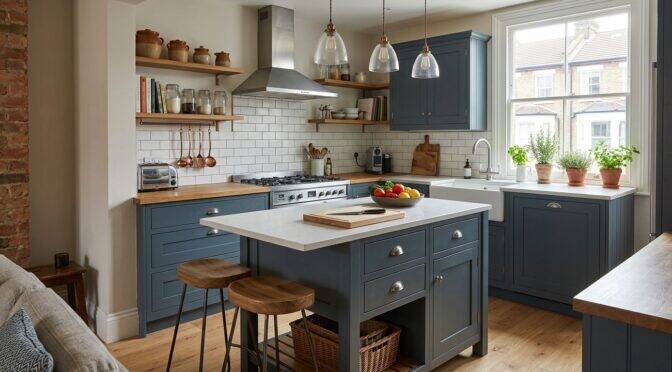
A kitchen island can completely change the way a kitchen looks and functions, but is a kitchen island worth it in a small London kitchen? The answer depends on the room’s proportions, layout and how you actually use the space. While islands can provide extra worktop, storage and seating, forcing one into a compact kitchen can make the room feel cramped rather than practical.
For London homes where space is often limited, the key is to make every part of the island work hard.
What Should You Consider Before Adding a Kitchen Island?

How much space do you need around an island?
The first thing to consider is the clearance around the island. You need enough room to move comfortably between the island, worktops and appliances.
An island that leaves very narrow walkways may look impressive in a plan but become frustrating in everyday use. Doors, drawers and appliances also need enough space to open without hitting the island.
This is why an island should be planned as part of the overall kitchen layout rather than added simply because there is an empty section of floor.
What can a small kitchen island actually provide?

Even a compact island can offer useful additional storage and preparation space. It could include drawers for everyday items, cupboards for larger appliances or a simple overhang for one or two stools.
The important thing is choosing features that suit the way you use your kitchen. If storage is your biggest problem, prioritise cabinetry. If you enjoy cooking, additional preparation space may be more valuable.
For inspiration, these small kitchen ideas can help you think about ways to make a compact space feel more functional.
Could a peninsula work better than an island?
Sometimes the answer isn’t an island at all.
A peninsula can provide many of the same benefits while remaining connected to a wall or run of cabinetry. This can be particularly useful in narrow kitchens where a freestanding island would restrict movement.
It can also help create a subtle division between the kitchen and an adjoining dining or living area without completely closing the space off.
How Can You Make a Small Kitchen Island Feel Practical and Well Designed?

Should the island include seating?
If you regularly have breakfast in the kitchen or want somewhere for guests to sit while you cook, a small seating area can make the island much more useful.
However, you don’t necessarily need a large breakfast bar. One or two carefully positioned stools may be enough.
What should you consider when choosing the island’s design?
The island should feel connected to the rest of the kitchen. Materials, cabinetry and worktops can be coordinated with the wider scheme, while lighting can help make it a visual focal point.
Good kitchen lighting is particularly important in a compact kitchen. Pendant lights or carefully positioned task lighting can illuminate the island without overwhelming the room.
You can also use the island to introduce a contrasting material or finish. In a more refined scheme, for example, detailed cabinetry and carefully selected finishes can give a small kitchen a distinctly considered feel. These luxury kitchens show how functionality and visual character can work together.
Ultimately, a kitchen island is worth considering when it improves how you use the room without compromising movement. In a small London kitchen, a well-proportioned island can provide valuable preparation space, storage and seating.
But sometimes the smartest solution is a smaller island, a peninsula or no island at all. The right choice should come from the room itself, rather than trying to make the room fit a particular kitchen trend.

