


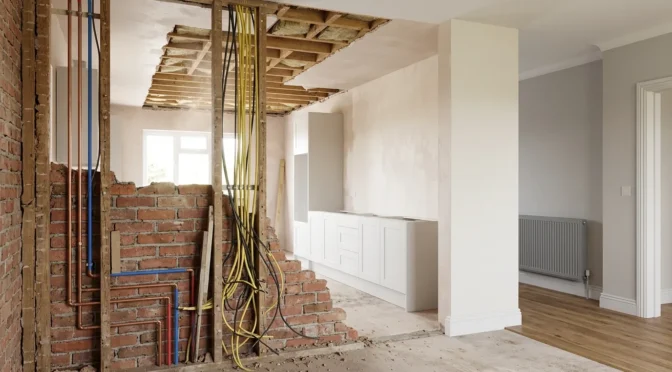
The correct order to renovate a house in the UK follows a strict seven-step timeline: 1) Design and planning permission, 2) Structural work and demolition, 3) First fix electrics and plumbing, 4) Plastering and drylining, 5) Second fix installation, 6) Painting and decorating, and 7) Final flooring and furnishing.
Following this specific sequence prevents costly mistakes and protects finished surfaces from damage:
- Phase 1: Planning and Approvals: Finalise designs, set budgets, and secure local council planning permission or building regulations approval.
- Phase 2: Demolition and Structural Fixes: Repair dampness, fix roofs, and knock down internal walls. Clear out unwanted fittings safely.
- Phase 3: First Fix Infrastructure: Lay internal pipework, pull electrical cables through walls, and fit central heating and insulation while walls are open.
- Phase 4: Plastering and Preparation: Skim walls and ceilings with plaster and ensure subfloors are flat and dry.
- Phase 5: Second Fix Fit-Out: Install kitchen units, sanitaryware, doors, architraves, light switches, plug sockets, and radiators.
- Phase 6: Painting and Decorating: Paint ceilings and walls, hang wallpaper, and fit wall tiles in wet areas.
- Phase 7: Flooring and Final Touches: Lay carpets, hardwood, or luxury vinyl tiles last to prevent damage. Add light fittings, blinds, and furniture.
Sticking to this exact order keeps tradespeople working efficiently and prevents expensive re-work.

