


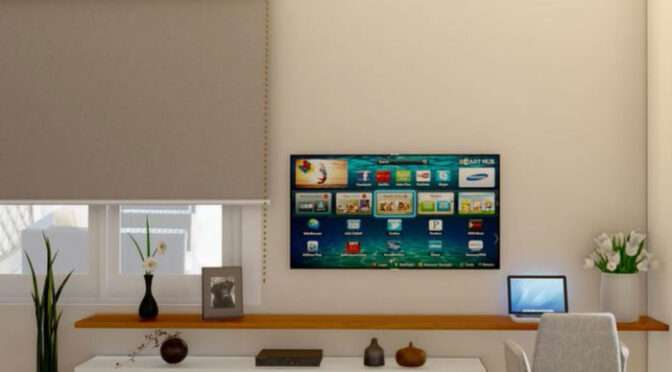
A home office needs to be practical, but that doesn’t mean it has to look like a traditional workplace. If you’re working from home every day, the space should support concentration while still feeling connected to the rest of your interior. So, how do you design a home office that still feels like part of the house?
The key is to treat the workspace as another room within the overall design rather than simply placing a desk wherever there is spare space.
What Makes a Home Office Feel Comfortable and Connected to the Rest of the Home?

How should you choose the right location?
Start with how you work. If you spend most of the day on video calls, a quieter room with a controlled background may be more suitable. If you need natural light and prefer an open atmosphere, a workspace near a window could work better.
You don’t necessarily need an entire room, either. An alcove, landing or unused section of a bedroom can sometimes become a functional workspace with the right planning.
Should your home office match the rest of the interior?
It doesn’t have to be identical, but it should feel like it belongs.
Repeating materials, colours or finishes from nearby rooms can create a sense of continuity. For example, timber detailing used elsewhere in the house could be introduced into the desk or shelving, while the same colour palette can help the workspace blend naturally into the room.
For inspiration, these home office ideas show how a workspace can be both functional and visually considered.
How important is natural light?
Natural light can make a significant difference to how a workspace feels during the day. Where possible, position the desk so that you benefit from daylight without creating glare on your screen.
Window treatments should also be considered early. They can help control brightness while contributing to the overall character of the room.
How Can You Make a Home Office Practical Without Making It Look Like an Office?

What storage does a home office really need?
Think beyond a desk and chair. Depending on your work, you may need space for documents, books, equipment and everyday stationery.
Built-in shelving or cabinetry can make use of vertical and awkward spaces while keeping the room visually tidy. It can also be designed to coordinate with the furniture and finishes already used elsewhere in the home.
This can be particularly useful when the office is part of another room, where bulky standalone storage could make the space feel cluttered.
How should you approach lighting?
A combination of natural and artificial lighting usually works better than relying on one source.
A desk lamp can provide focused task lighting, while wall lights or ceiling lighting can provide softer illumination around the rest of the room. The aim is to create a workspace that works during the day and remains comfortable in the evening.
Good natural lighting can also influence the colours and finishes you choose, so it is worth considering before finalising the scheme.
Can a home office still feel personal?
Absolutely. Artwork, books, plants, photographs and carefully chosen accessories can make the space feel like part of your home rather than a temporary workstation.
The same principle applies to furniture. A well-designed desk, comfortable chair and considered storage can feel more like residential furniture than commercial office equipment.
For larger properties, thinking about the workspace as part of the wider residential design scheme can help ensure that it works with the rest of the home.
A successful home office doesn’t need to look like an office. It needs to give you the practical support to work comfortably while still reflecting the character of your home.
With the right layout, storage, lighting and materials, even a dedicated workspace can feel completely natural within a residential interior.

