


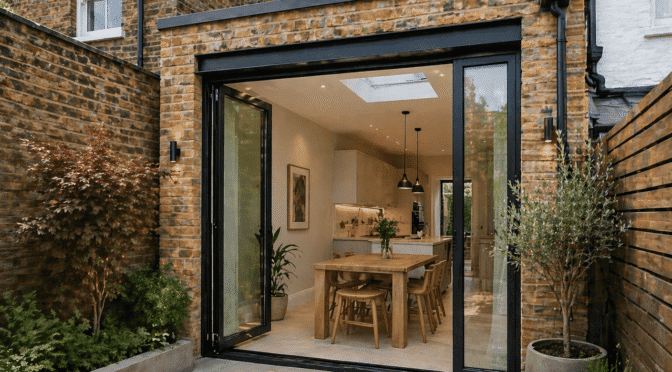
Renovating a house is one of the largest financial commitments a homeowner makes. Whether you are planning a full property overhaul, a room-by-room upgrade, or something in between, understanding the true cost before a single contractor is appointed is essential. Budgets built on assumptions rather than real figures are the single most common reason renovation projects run over—and in the UK in 2026, where labour costs have risen sharply and material prices remain elevated, the gap between expectation and reality can be significant. Preparing a comprehensive property renovation in London requires a strategic approach and an eye for detail from the very beginning.
This guide gives you a clear, honest breakdown of house renovation costs across every scope and specification level. It covers full house renovations, room-by-room costs, what drives prices up or down, and how to structure a budget that holds. If you are based in London and looking for a team to manage your project from design through to completion, Oraanj’s renovation company London service covers the full scope of residential renovation work across the capital.
What Is the Average Cost to Renovate a House in the UK?

The average cost to renovate a house in the UK in 2026 depends heavily on three variables: the size of the property, the scope of the works, and the specification of materials and finishes. There is no single figure that applies to all projects, but the following ranges give a realistic framework for planning purposes.
For a three to four bedroom semi-detached or terraced house:
- Cosmetic renovation (redecoration, new flooring, minor kitchen and bathroom updates, no structural work): £15,000 to £40,000
- Moderate renovation (full strip-out and refit of kitchen and bathrooms, new heating system, replastering, redecoration throughout): £40,000 to £90,000
- Full renovation (structural changes, layout reconfiguration, full systems replacement, quality finish throughout): £90,000 to £200,000
- High-specification full renovation (premium materials, bespoke joinery, smart home integration, significant structural works): £200,000 to £450,000+
These figures are for supply and installation and include labour, materials, and basic project management. They do not include VAT, professional fees, or planning costs. Always add 10 to 15 per cent as a contingency on top of any budgeted figure—unexpected structural issues, drainage discoveries, and specification changes during construction are common on any renovation project of meaningful scale.
How Much Does It Cost to Renovate a House Room by Room?

Breaking renovation costs down by room helps homeowners prioritise where to invest and build a phased plan that aligns with available budget.
Kitchen Renovation Cost
The kitchen is the highest-impact room in any house renovation and consistently the largest single budget item outside of structural works. A kitchen renovation in London and across the UK varies significantly by specification:
- Entry-level kitchen renovation (standard units, basic appliances, no layout changes): £8,000 to £15,000
- Mid-range kitchen renovation (quality units, integrated appliances, new flooring, some layout changes): £15,000 to £35,000
- High-specification kitchen renovation (bespoke cabinetry, premium appliances, stone worktops, structural changes): £35,000 to £80,000
- Luxury kitchen renovation (full bespoke joinery, Calacatta stone, top-tier appliances, smart integration): £80,000 to £150,000+
The kitchen is the room where specification upgrades generate the strongest returns. Investing in quality cabinetry, worksurfaces, and appliances over the entry-level tier consistently adds more value than the incremental cost involved.
Bathroom Renovation Cost
[caption id="attachment_9897" align="alignnone" width="2560"] Bathroom Renovation Company London
A bathroom renovation in London and across the UK is one of the most impactful room-by-room investments a homeowner can make. When calculating a realistic bathroom renovation cost in London in 2026, figures typically break down as follows:
- Basic bathroom refresh (new sanitaryware, tiling, and fixtures, no layout changes): £4,000 to £8,000
- Mid-range bathroom renovation (full strip-out, new layout, quality tiles and fittings): £8,000 to £18,000
- Premium bathroom renovation (bespoke vanity, designer sanitaryware, natural stone, smart shower): £18,000 to £40,000
- Luxury bathroom renovation (full architectural reconfiguration, high-end stone, bespoke cabinetry, premium brassware): £40,000 to £70,000+
For a full property renovation, budgeting for the principal bathroom at a higher specification than en-suites and guest bathrooms is a practical approach that balances quality with cost control.
Living Room Renovation Cost
A full living room renovation, new flooring, replastering, redecoration, fireplace works, built-in joinery, and lighting, typically costs between £5,000 and £20,000 depending on the size of the room and the specification of the finishes. Bespoke alcove units, wall panelling, and designer lighting can push this higher. Without structural changes, the living room is one of the more manageable renovation budget items.
Bedroom Renovation Cost
[caption id="attachment_8717" align="alignnone" width="808"] Elegant contemporary bedroom with Mediterranean‑inspired wood detailing and art‑deco lighting accents.[/caption>
A standard bedroom renovation covering new flooring, redecoration, and fitted wardrobes typically costs between £3,000 and £12,000 per room. A principal bedroom with bespoke fitted joinery, dressing room, and premium finishes can reach £20,000 to £40,000 for the room as a whole. En-suite bathroom costs are additional to these figures.
Loft Conversion Cost
A loft conversion is one of the most effective ways to add usable square footage without extending the property’s footprint. In the UK in 2026:
- Velux loft conversion (no structural change to roofline): £25,000 to £45,000
- Dormer loft conversion (rear dormer adding headroom and floor area): £45,000 to £75,000
- Hip-to-gable conversion (common on semi-detached properties): £55,000 to £85,000
- Mansard conversion (maximum space addition, requires planning permission): £70,000 to £120,000
These figures include structural works, stairs, insulation, electrics, and a basic finish. Bathroom addition and premium finishing are additional.
Extension Cost
A single-storey rear extension typically costs £2,000 to £3,500 per square metre in London and £1,600 to £2,800 per square metre in other UK regions. A 20 square metre rear extension in London would therefore cost £40,000 to £70,000 at a standard specification, rising with premium materials and structural complexity. For a detailed breakdown of planning budgets, our guide to home extension costs covers structural options and design ideas in full. A double-storey extension adds proportionally less per square metre than a single-storey because the foundations and roof costs are shared across two floors.
What Factors Affect the Cost of Renovating a House?

Understanding what drives renovation costs up or down allows homeowners to make informed decisions about where to invest and where to economise without compromising the finished result.
Property size. Larger properties cost more to renovate in absolute terms, but the cost per square metre often reduces slightly as fixed project costs, scaffolding, site setup, project management — are spread across a larger floor area.
Property condition. Older properties frequently conceal structural issues, outdated wiring, failing drainage, and damp that only become apparent once the renovation begins. A Victorian terrace that has not been updated for 20 or more years should always carry a higher contingency than a recently built property.
Scope of structural works. Removing walls, adding extensions, excavating basements, and reconfiguring layouts all require structural engineering input, building regulations approval, and significantly more contractor time than a cosmetic renovation. Structural changes are almost always the largest driver of cost escalation in house renovation projects.
Specification level. The difference in cost between a mid-range and a high-specification renovation of the same property can be 50 to 100 per cent. Materials alone, the difference between standard ceramic tiles and natural Carrara marble, between flat-pack kitchen units and bespoke hand-painted cabinetry — can account for a substantial portion of that gap.
Location. Renovation costs in London are 30 to 50 per cent higher than in most other UK regions, driven by higher trade labour rates, logistical costs, and the complexity of working in a dense urban environment. Projects in prime London postcodes carry additional premiums for specialist trades and the higher expectations that come with high-value properties.
Design and project management. Professional fees for architects, interior designers, structural engineers, quantity surveyors, and project managers typically add 12 to 18 per cent to the construction cost. This is not a cost to avoid. A well-managed renovation with a clear design and specification in place before work begins consistently delivers better results at lower overall cost than a project where decisions are made on the fly during construction.
How Long Does It Take to Renovate a House in the UK?
[caption id="attachment_9922" align="alignnone" width="1536"] A compact kitchen designed with clever storage, two-tone cabinetry, and a fold-out breakfast bar—perfect for maximising space in modern London homes.
Renovation timelines vary considerably based on the scope of the project and the efficiency of the project team.
- Cosmetic renovation of a three to four bedroom house: six to twelve weeks
- Moderate renovation including kitchen and bathrooms: three to five months
- Full renovation with structural changes: five to nine months
- Full renovation with extension or loft conversion: eight to fourteen months
These timelines assume that design and planning are completed before work starts on site. Projects where design decisions are still being made during construction take significantly longer and cost considerably more.
Planning permission, where required, adds eight to thirteen weeks to the pre-construction phase. Building regulations approval and party wall agreements run in parallel and should be initiated as early as possible to avoid programme delays.
Should You Renovate Your Home in Phases or All at Once?
For homeowners with a fixed budget that does not cover a full renovation in one programme, phasing the works is a practical solution. However, phasing needs to be planned intelligently to avoid paying twice for works that could have been done together.
Replumbing, rewiring, and installing a new heating system should always be done as early as possible in the renovation sequence — ideally before any plastering or decorating. Doing these works after rooms have been finished means opening up walls and ceilings that have already been made good, which is both expensive and disruptive.
Kitchen and bathroom renovations make logical phases because they are self-contained and generate immediate lifestyle improvements. Structural works such as extensions and loft conversions are best carried out as a single phase because the enabling works, scaffolding, structural engineering, building regulations, carry fixed costs that do not reduce if the works are split.
An experienced interior design company can help you structure a phased renovation plan that sequences the works logically, protects completed phases from disruption, and maximises the value of each stage of investment.
How Do You Get Accurate Renovation Costs Before You Start?
The most reliable way to understand what your specific renovation will cost is to have a detailed set of drawings and a clear specification prepared before approaching contractors for quotes. Vague briefs generate wide-ranging estimates that are difficult to compare and almost always understate the true cost.
The practical steps to get accurate costs are straightforward. Commission a design team to produce measured drawings and a full specification of the works. Approach a minimum of two to three contractors with identical information. Ask for itemised quotes broken down by trade and work category. Verify references from comparable completed projects before appointing anyone.
If your renovation project involves significant design complexity or a premium specification, bringing in a quantity surveyor to produce an independent cost plan at the design stage provides a benchmark against which contractor quotes can be evaluated. The QS fee is modest relative to the cost certainty it provides on a project of meaningful scale.
If you are planning a house renovation and would like to discuss your project with a team that manages design, specification, and construction delivery under a single brief, book a free consultation with Oraanj Interiors and we will help you build a plan that delivers the result your home deserves.

