


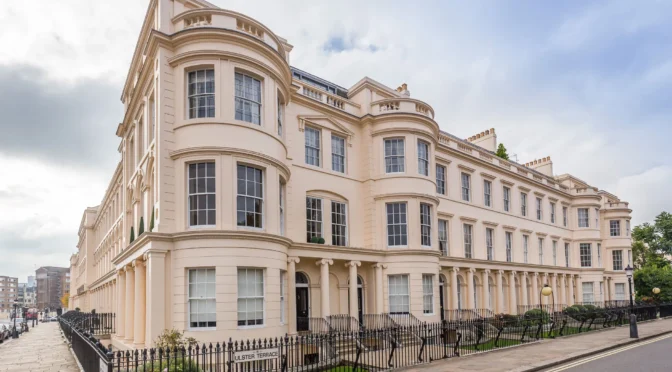
London interior design studio appointed to an exceptional Grade I listed residence within John Nash’s historic Regent’s Park Crown Estate development, for an international client based in Dubai.
London – Oraanj Interior Design, a London-based interior design firm, is proud to announce its appointment to a private residence at Ulster Terrace, overlooking Regent’s Park.
The property forms part of Ulster Terrace, a Grade I listed John Nash terrace originally built as part of the Regent’s Park Crown Estate development.
The appointment is a significant milestone for the studio and further strengthens its work within London’s prime and heritage residential sector. The private client is based in Dubai, reflecting Oraanj’s growing client base of international homeowners seeking a specialist high end interior designer for prestigious London residences.
For reasons of client privacy, the identity of the homeowner and specific apartment details will remain confidential.
One of London’s Most Architecturally Significant Residential Settings
Ulster Terrace sits within one of London’s most recognisable historic landscapes, overlooking Regent’s Park. It was designed by John Nash around 1824, as part of his wider Regent’s Park development.
Nos. 1–17 Ulster Terrace now carry Grade I listed status, the highest statutory listing classification in England, reserved for buildings of exceptional architectural or historic interest. That designation makes this commission a great deal more than a typical luxury residential project. It calls for a genuine understanding of architecture, heritage and how people actually want to live today.
What Grade I Listed Status Actually Means?

England has hundreds of thousands of listed buildings, but only around 2.5% carry Grade I status, the highest tier there is.
Working within a property at this level changes the brief entirely. It’s no longer just a question of making a home more beautiful, it’s about adapting a historic property for contemporary living without losing the qualities that made it exceptional in the first place. That balance is central to how Oraanj has approached the Ulster Terrace project.
Heritage Architecture Meets Contemporary International Living
Designing for a Dubai-based client brings together British architectural heritage and contemporary international expectations of luxury. High-net-worth homeowners want their London homes to feel as considered and comfortable as their residences anywhere else in the world — but within a Grade I listed building, every intervention has to be handled with far more care.
The design considers how the following elements sit alongside one another:
- historic architectural character
- contemporary furniture and finishes
- lighting and atmosphere
- bespoke joinery
- spatial planning
- art and decorative elements
- modern lifestyle requirements
- the long-term character of the property
The goal isn’t to compete with the architecture, it’s to let contemporary design sit comfortably within it.
Why Ulster Terrace Matters?
Ulster Terrace is far more than a prestigious address. It’s part of John Nash’s vision for Regent’s Park, one of the defining pieces of urban planning in Regency London. Its stucco façades, Ionic detailing and formal composition are part of what gives the area around Regent’s Park its distinctive character.
Historic England records Ulster Terrace as having been built around 1824 by John Nash as part of the Regent’s Park Crown Estate development, nearly two centuries of history that any interior designer working on the property has to design alongside, not over.
Designing Within the Crown Estate Context
Projects within the Crown Estate can come with considerations that go well beyond a typical residential refurbishment. Previous work at Ulster Terrace has shown just how much sensitivity is required here, including restrictions around architectural alterations, glazing, lighting and building services.
For Oraanj, that reinforces an approach built on careful planning rather than unnecessary intervention. Luxury in a historic residence isn’t measured by how dramatically the building has been changed, often, the most successful outcome is an interior that feels like it was always meant to be there.
A Significant Appointment for Oraanj Interior Design
Rachana Gupta, Founder of Oraanj Interior Design, said:
“To be appointed for a private residence within a Grade I listed John Nash terrace overlooking Regent’s Park is an incredibly exciting moment for Oraanj. This is the kind of project where interior design has to go far beyond aesthetics, we’re working within a piece of London’s architectural history, so every decision has to respect that history while also creating a beautiful, highly functional home for a contemporary international client. Our client is based in Dubai, and it’s genuinely rewarding to see international clients trusting Oraanj with residences of this calibre in London.”
A Different Kind of Luxury
Projects like Ulster Terrace point to a broader shift in luxury residential design. Increasingly, luxury has less to do with excess and more to do with provenance, craftsmanship, architecture and individuality.
A bespoke piece of furniture built around a historic room can carry more value than an expensive statement piece bought off the shelf. A well-judged lighting scheme can bring out original architectural proportions instead of overpowering them. And thoughtful spatial planning can change how a historic building feels to live in, without touching what made it worth preserving in the first place.
That’s where interior design, interior architecture and heritage sensitivity have to work together, and it’s an approach that has become central to how Oraanj works as an interior design company.
London Homes for International Clients
London continues to draw homeowners from the Middle East, Africa, Asia, Europe and further afield who keep residences in the capital. For these clients, an interior designer needs to understand not just the architecture of the property, but how a family based elsewhere actually intends to use it.
Some properties are principal homes. Others are used throughout the year for business, education, family visits or extended stays. Either way, it creates a particular kind of design challenge: a home that has to feel deeply personal, while also working effortlessly whenever its owners arrive in London.
The Ulster Terrace appointment reflects Oraanj’s growing involvement in exactly this part of the international luxury residential market.
Respecting the Past While Designing for the Future

The best heritage interiors rarely try to recreate a museum. Historic buildings survive because they continue to serve a purpose. For Oraanj, the challenge at Ulster Terrace isn’t preservation for its own sake, and it isn’t unrestricted modernisation either, it’s finding the point where heritage architecture and contemporary life sit well together.
With its Grade I designation, John Nash architecture, Regent’s Park setting and connection to the historic Crown Estate, Ulster Terrace offers exactly that kind of opportunity. For Oraanj, it’s both a significant achievement and a privilege, a chance to help shape the next chapter of one of London’s exceptional historic residential settings.
Project Information
- Project: Private Luxury Residence
- Location: Ulster Terrace, Regent’s Park, London
- Property Type: Residential
- Heritage Status: Grade I Listed
- Architectural Heritage: John Nash, c.1824
- Historic Development: Regent’s Park Crown Estate Development
- Client: Private International Client
- Client Base: Dubai, UAE
- Interior Design: Oraanj Interior Design
- Exact residence and client identity: Withheld for privacy
About Oraanj Interior Design
Oraanj Interior Design is a London-based interior design studio specialising in high-end residential and commercial interiors, interior architecture, bespoke furniture and joinery, FF&E, sourcing and procurement, lighting design and full-service interior solutions.
Working with clients in London, across the UK and internationally, Oraanj creates considered interiors shaped around architecture, lifestyle and individual client requirements.

