


Opening a restaurant in London is an exciting venture, full of creativity, ambition, and opportunity. However, rising rents, limited floor space, strict regulations, and tight operating margins can make interior design decisions feel daunting—particularly for first-time restaurateurs or independent operators. The good news is that a small or low-budget restaurant can still achieve a stylish, functional, and commercially successful interior with the right design approach.
Whether you are launching a compact café, a takeaway concept, a fast-casual eatery, or a cosy sit-down restaurant, smart design decisions can help you maximise space, reduce costs, and elevate customer experience. Successful Cafe Interior Design is not about how much you spend, but how intelligently you use your budget.
This guide outlines practical, cost-effective interior design strategies that work especially well for London’s compact hospitality spaces, helping you create an inviting environment without overspending.
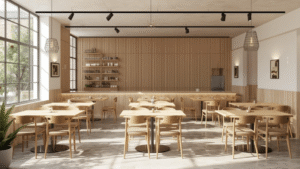
1. Start With a Clear Concept (Brand Before Budget)
When designing a restaurant on a limited budget, clarity of concept is your most valuable tool. Rather than investing in numerous decorative elements, a strong, clearly defined concept ensures that every design choice feels intentional and cohesive.
Before finalising any design decisions, consider:
- What emotions do you want customers to feel when they enter?
- How does your interior reflect your cuisine or service style?
- Who is your target customer, and how will they use the space?
- What story does your brand tell visually?
A strong concept allows you to simplify material choices and reduce unnecessary spending. Even modest finishes can look premium when they are consistent with the overall narrative. This principle is especially effective in compact London venues, where simplicity often works better than excess.
Well-executed branding paired with thoughtful design direction creates a strong first impression, helping your restaurant stand out in a competitive market.
2. Use Space-Saving Furniture for Small Restaurants
Limited square footage is one of the biggest challenges for restaurant owners in London. Smart furniture selection plays a crucial role in ensuring that your space feels comfortable, efficient, and inviting rather than cramped.
Space-efficient furniture solutions include:
- Wall-mounted or fixed bench seating to maximise floor area
- Two-top tables that can be easily joined for larger groups
- Slimline chairs or stools that maintain comfort without bulk
- Foldable or stackable furniture for flexible layouts
- Built-in banquettes that support multiple seating configurations
Thoughtful Space Planning ensures that every square metre contributes to revenue generation while maintaining customer comfort. Efficient layouts also improve staff circulation, reducing congestion during busy service periods.
The goal is to balance seating capacity with ease of movement, creating a dining experience that feels relaxed despite limited space.
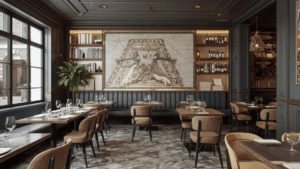
3. Choose Budget-Friendly Materials That Look Premium
High-end finishes such as marble, brass, or bespoke joinery may look impressive, but they are rarely necessary—especially for small or budget-conscious restaurants. Today, there are many affordable alternatives that offer the same visual impact with greater durability and lower maintenance costs.
Consider using:
- Laminate surfaces with realistic wood or stone textures
- Vinyl or LVT flooring that mimics concrete or hardwood
- Ready-made shelving systems that can be customised with paint or lighting
- Cost-effective acoustic panels to improve ambience
- Standardised modular fixtures instead of bespoke items
With careful styling and colour coordination, these materials can create a refined and professional look. This approach is widely used by experienced Bar Interior Designers, who understand how to achieve impact without overspending.
Durability should also be a priority—choosing finishes that withstand heavy use will save money in the long run.
4. Maximise Lighting to Make Small Spaces Feel Larger
Lighting is one of the most powerful and cost-effective design tools in hospitality interiors. The right lighting scheme can instantly transform a small restaurant, making it feel larger, warmer, and more inviting.
Effective lighting strategies include:
- Warm LED strip lighting under counters or shelving
- Pendant lights to add personality and define seating areas
- Mirrors placed strategically to reflect natural light
- Layered lighting combining ambient, task, and accent lighting
- Defined lighting zones for dining, ordering, and waiting areas
Thoughtful Lighting Design enhances mood, improves visibility, and supports the overall brand identity. It also influences how long customers stay and how comfortable they feel—directly impacting revenue.
In compact spaces, lighting helps create depth and visual interest without requiring additional square footage or expensive finishes.
5. Create Instagram-Friendly Design Moments (Affordable Marketing)
In today’s digital age, your restaurant interior is also a marketing tool. Social-media-friendly design elements encourage customers to share photos, generating free exposure and increasing brand awareness.
You do not need a large budget to create visual moments that stand out. Affordable ideas include:
- A bold painted or textured feature wall
- A neon-style LED sign with your brand message
- Patterned wallpaper in a focal area
- A hand-painted or printed mural
- A well-styled corner designed specifically for photography
These elements work particularly well in small spaces, where one standout feature can elevate the entire interior. Simple design moments can drive online engagement and footfall, making them a smart investment.
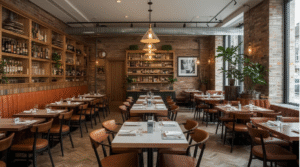
6. Build an Efficient Layout to Increase Revenue
A well-designed restaurant layout is about more than aesthetics—it directly affects how many customers you can serve and how efficiently your team can operate. Even minor layout improvements can significantly impact profitability.
Key layout principles include:
- Positioning ordering and pick-up points near the entrance
- Using vertical storage to free up valuable floor space
- Maintaining clear circulation routes for staff and customers
- Zoning areas for dining, waiting, takeaway, and service
- Optimising seating layouts to improve turnover without discomfort
Professional Interior Design Project Management ensures that layouts comply with regulations while supporting operational efficiency. A carefully planned floor plan reduces bottlenecks, improves service speed, and enhances the overall customer experience.
7. Add Greenery for Budget-Friendly Atmosphere
Greenery is one of the most cost-effective ways to enhance a restaurant interior. Plants introduce warmth, texture, and freshness—helping soften urban spaces and create a welcoming atmosphere.
Budget-friendly greenery options include:
- Artificial plants for low maintenance
- Small potted herbs that add authenticity
- Wall-mounted planters for vertical interest
- Low-maintenance indoor plants suitable for hospitality environments
Natural elements help make compact interiors feel more relaxed and human-centred, encouraging customers to linger longer.
8. Get Inspired by Café Trends (Perfect for Small Spaces)
Many cafés are designed with limited budgets and small footprints, making them an excellent source of inspiration for restaurant owners. Café interiors often prioritise simplicity, functionality, and atmosphere—principles that translate well to low-budget restaurants.
Key café-inspired ideas include:
- Minimalist layouts with efficient seating
- Neutral colour palettes with bold accents
- Open shelving and exposed finishes
- Compact counters with integrated storage
Behind the scenes, accurate Technical CAD Drawings help translate these ideas into precise layouts that work in real-world conditions, ensuring smooth execution during fit-out.
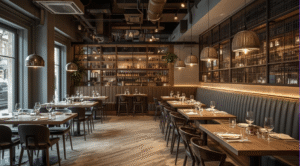
Final Thoughts
Designing a small or low-budget restaurant in London does not mean compromising on style, identity, or customer experience. With a clear concept, intelligent space planning, thoughtful material selection, and creative use of lighting, even the most compact space can feel distinctive and successful. In fact, many of the principles outlined here align closely with 7 Restaurant Interior Design Concepts That Drive More Customers, proving that smart design choices—not excessive spending—are what truly influence footfall, dwell time, and repeat visits.
By focusing on functionality, atmosphere, and brand consistency—and supporting the process with strategic Procurement—you can create a restaurant interior that supports daily operations while leaving a lasting impression on customers.
With the right design strategy, your restaurant can stand out in London’s competitive hospitality scene, attract repeat customers, and support long-term business growth—without exceeding your budget.


