


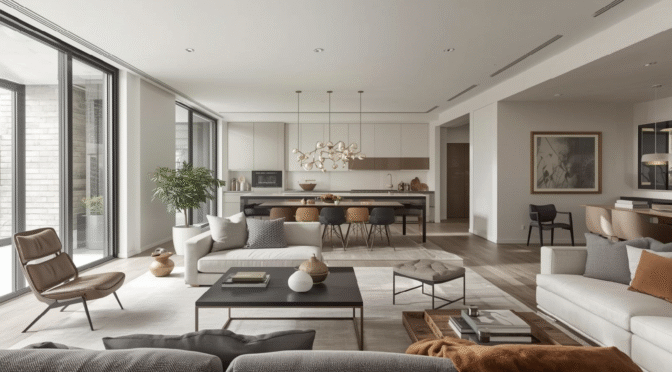
Spatial design is an emerging concept in modern interiors. However, it goes far beyond arranging furniture. Instead, spatial design focuses on shaping spaces around purpose, emotion, and human connection. It considers how people move, feel, and function within a space.
This strategy is being increasingly valued and adopted by seasoned Interior Designers in London, due to the fact that both residential and work spaces are being asked to fulfil multiple functions in smaller and smaller spaces.
Whether it’s a rethink of a London apartment, a home office or a commercial fit-out, space design means your space works smarter, not harder.
The Foundations of Good Spatial Design
Strong spatial design relies on several key principles:
Functionality
A space must support your lifestyle or business needs.
Flow
Movement between areas should feel natural and intuitive.
Proportion & Scale
Furniture and architectural features must feel balanced within the room.
Zoning
Open-plan layouts still need structure. Clear zones help define activities without creating clutter.
In reality, effective Space Planning can begin with observation of how people flow through a space, which is something we regularly evaluate during initial site visits.
Current Trends in Spatial Design (2026)
Interior design evolves with lifestyle shifts. In 2026, spatial design continues to respond to changing ways of living.
Multi-Functional Living Spaces
Hybrid working has reshaped homes. Many homeowners now need spaces for work, relaxation, and socialising. Good spatial design allows smooth transitions between these uses.
This is being addressed by many luxury interior designers in London, who are designing spaces with changing dynamics from quiet and concentrated in the mornings to relaxed and social in the evenings.
Biophilic Layouts
Nature remains a strong design influence. Layouts that maximise daylight, garden access, and outdoor views help support wellbeing.
Integrated lighting design plays a major role here. It complements natural light instead of competing with it, especially in deeper floor plans.
Soft Separation
Instead of solid walls, designers now use:
-
Curtains
-
Open shelving
-
Slatted timber partitions
-
Glass dividers
These elements define areas while preserving visual flow. They work especially well in apartments.
Smart Spatial Planning in Small Homes
Small homes, also known as the price of housing, continue to rise; clever design becomes more necessary in UK city homes. Built-in storage, fold-away desks, and sliding doors are just some of the popular design elements being incorporated to maximise the use of available space. This approach exemplifies Interior Design for Small Spaces: Stylish Solutions That Maximise Every Inch, where careful planning and clever furnishings transform even the most compact London homes into functional, comfortable, and visually appealing environments.
Thoughtful design layouts combined with a thoughtful Colour Consultation can make even small rooms appear far more spacious.
Inclusive and Accessible Design
Modern spatial design also prioritises accessibility. Universal design principles create safe, comfortable environments for people of all ages and abilities.
Importantly, inclusive design benefits everyone—not only those with specific needs.
How Oraanj Interiors Brings Spatial Design to Life?
Our team partners with our clients in the UK to understand their space, their objectives, and their style. Our service includes:
Site Survey & Assessment
Light, Flow, Structure, User Needs Analysis.
Concept & Layout Planning
The concept planning, showing floor plans, mood boards, and 3D visualisations to explore possibilities.
Styling & Furnishing
Choosing works that improve flow, functionality, and aesthetic unity.
Project Implementation
Project Handling the change in all its details, with professional supervision.
As an award-winning Interior Design Studio in London, we have seen that the most successful projects are achieved when decisions about space are coordinated early, and prior to decisions being made about finishes and furniture. Whether it’s a renovation or a commercial venture, we make sure that everything is placed in a well-thought-out manner through a full-service design.
Why It Matters?
Good spatial design can:
✔ Maximise usable space (vital in city homes)
✔ Boost resale value
✔ Improve daily comfort and efficiency
✔ Strengthen brand identity in commercial spaces
In certain residential projects, the design of space is further articulated through principles of Feng Shui Consultation, in which the principles of layout, balance, and movement define the nature of the space itself.
Let’s Redesign Your Space, the Smart Way


