


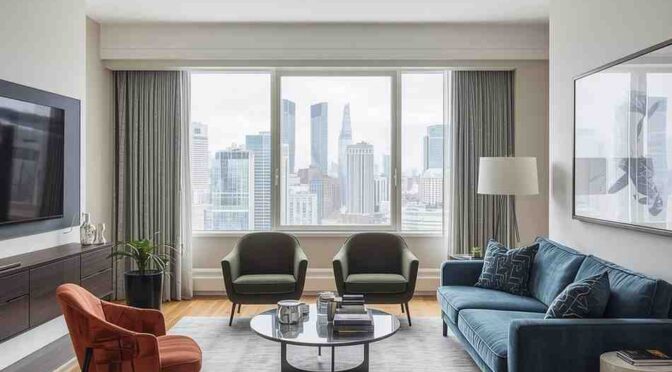
London’s property market is one of the most competitive in the world, and homeowners are constantly looking for ways to increase the value of their homes. While extensions and renovations are common approaches, many property owners overlook one of the most powerful and cost-effective value-boosting tools available: professional interior design.
In a city where space is at a premium and buyer expectations are high, interior design plays a critical role in shaping how a property is perceived, experienced, and ultimately valued. From smarter layouts and tailored lighting to refined finishes and bespoke detailing, professional design has the ability to elevate both resale price and market appeal.
From period townhouses in Kensington to contemporary apartments in Canary Wharf, well-considered interiors help properties stand out in a saturated market. In this comprehensive guide, we break down exactly how expert design transforms your home into a more desirable, functional, and high-value space.
1. First Impressions: Elevating Your London Home’s Visual Impact
Buyers decide on a property within the first 10 seconds.
A well-designed interior immediately communicates quality, care, and long-term value. This principle sits at the heart of London Property Staging: How to Attract High-Value Buyers, where strategic interior presentation is used to highlight a home’s strengths, create emotional connection, and position the property as a premium offering in a competitive market.
Professional designers understand how to craft interiors that create an emotional connection from the moment a buyer walks through the door. Entrance halls, sightlines, and focal points are all carefully considered to ensure the space feels welcoming, balanced, and aspirational.
Interior designers understand:
- Colour psychology for creating mood and spatial harmony
- How lighting enhances architecture and proportions
- How to layer textures to add depth, warmth, and luxury
- How to balance modern elements with timeless appeal
Even small upgrades such as improved furniture placement, feature lighting, wall finishes, and cohesive styling can dramatically heighten perceived value. A strong first impression sets expectations for the rest of the property and encourages buyers to emotionally invest before negotiations even begin.
2. Improving Space Planning for Higher Property Appeal
London homes — from Victorian terraces to new-build apartments — often suffer from awkward layouts, limited square footage, or poorly defined spaces. Good design corrects these challenges without necessarily requiring major construction.
Thoughtful Space Planning focuses on how people move through a home and how each area functions in daily life. Designers assess sightlines, circulation routes, furniture scale, and spatial balance to ensure every square metre works efficiently.
Strategic planning increases value by:
- Maximising usable space without extending the footprint
- Improving traffic flow between rooms
- Making compact rooms feel more open and breathable
- Highlighting architectural strengths rather than flaws
- Reducing renovation waste through better decision-making
By resolving layout inefficiencies, interior design helps buyers immediately understand how they would live in the property — a crucial factor in faster sales and higher offers.
3. Upgrading Key Areas Buyers Care About Most
Certain rooms influence a home’s value more than others, and buyers often judge a property based on how modern, practical, and refined these spaces feel.
The most impactful areas include kitchens, bathrooms, and primary living spaces. Rather than full demolitions, designers focus on targeted upgrades that deliver maximum visual and functional improvement.
Kitchens
- High-quality worktops that feel durable and luxurious
- Smarter storage solutions to reduce clutter
- Improved task and ambient lighting
- Updated cabinetry fronts for a modern refresh
- Statement splash backs that add personality
Bathrooms
- Sleek tiling with consistent detailing
- Walk-in showers with frameless glass
- Underfloor heating for comfort and efficiency
- Spa-inspired finishes that feel indulgent
Living Spaces
- A cohesive colour palette throughout
- Better furniture positioning for flow and balance
- Improved use of natural and layered lighting
These upgrades enhance everyday living while signalling long-term quality to potential buyers.
4. Interior Design Enhances Property Functionality
Modern London buyers care about functionality just as much as aesthetics. Homes must adapt to evolving lifestyles that often combine living, working, entertaining, and relaxing within the same footprint.
Professional interior design improves daily living by:
- Adding built-in storage to reduce visual clutter
- Creating clearly defined zones for work, dining, and relaxation
- Incorporating space-saving and multi-functional furniture
- Correcting inefficient or underused layouts
- Improving lighting for both practical and ambient use
Behind the scenes, designers also coordinate layouts, timelines, and decision-making through Interior Design Project Management, ensuring that functionality is delivered efficiently without costly delays or errors.
Better functionality directly increases a property’s desirability, helping it stand out in a market where buyers are increasingly discerning.
5. Adding Luxury Details That Increase Perceived Value
Luxury does not always mean excessive spending. Skilled designers know how to create a premium feel through proportion, material selection, and attention to detail.
Subtle yet impactful luxury enhancements include:
- Feature walls with textured finishes
- Layered lighting schemes for atmosphere and flexibility
- Tailored storage solutions and joinery
- Natural stone or high-quality engineered materials
- Elevated finishes in high-visibility areas
Custom elements such as Bespoke Joinery London and Custom Furniture Design allow interiors to feel unique, intentional, and far removed from generic developer finishes. These details signal craftsmanship and longevity — two qualities buyers associate with higher value.
To explore luxury concepts, browse our Luxury Interior Design Page.
6. Commercial & Investment Properties: Design Boosts Rental ROI
Interior design is not only for homeowners — landlords and property investors also benefit significantly from professional design input.
Well-designed rental properties consistently outperform poorly planned ones in both price and occupancy. Thoughtful interiors appeal to tenants seeking comfort, durability, and style, particularly in competitive rental zones across London.
Key benefits include:
- Higher achievable rental rates
- Shorter vacancy periods
- Stronger tenant retention
- Increased long-term asset appreciation
Designers often integrate Procurement Services to source durable, cost-effective furnishings and finishes that withstand heavy use while maintaining a premium appearance.
Business owners can also benefit from design-led spaces. See how interiors transform workplaces in our Office Interior Design Portfolio.
7. Restaurants & Hospitality: Design Directly Impacts Profit
In London’s hospitality sector, interior design directly influences customer behaviour, brand perception, and profitability. Restaurants, cafés, and bars rely on atmosphere as much as food quality to attract and retain customers.
Great hospitality interiors:
- Encourage longer customer dwell time
- Improve comfort, acoustics, and circulation
- Strengthen brand identity and storytelling
- Create social-media-friendly moments
- Support efficient service and staff flow
Through integrated Interior Architecture and Design and Build London solutions, designers ensure that aesthetics, functionality, and operational requirements work seamlessly together.
8. Why Professional Interior Designers Add Considerable Financial Value?
Hiring a trained interior designer is not just about aesthetics — it is a strategic investment that protects your budget and maximises returns.
Professional designers help avoid costly mistakes such as:
- Purchasing incorrectly scaled furniture
- Poor lighting placement that flattens spaces
- Inefficient layouts that limit usability
- Clashing styles that confuse buyers
- Overspending on materials that do not add value
With a Full Service Interior Design London approach, every stage — from concept to completion — is coordinated with clarity and purpose, ensuring your property achieves its full potential.
Conclusion:
Whether you are renovating, preparing to sell, investing, or simply modernising your home, interior design remains one of the most reliable and impactful ways to increase property value in London. Through strategic planning, carefully curated materials, and expert execution, professional design transforms ordinary spaces into highly desirable assets.
By enhancing functionality, elevating visual appeal, and delivering long-term quality, interior design not only improves how a space looks — it directly influences how it performs on the market. In a city where every detail matters, thoughtful interiors are no longer optional; they are essential to maximising value and long-term returns.


