


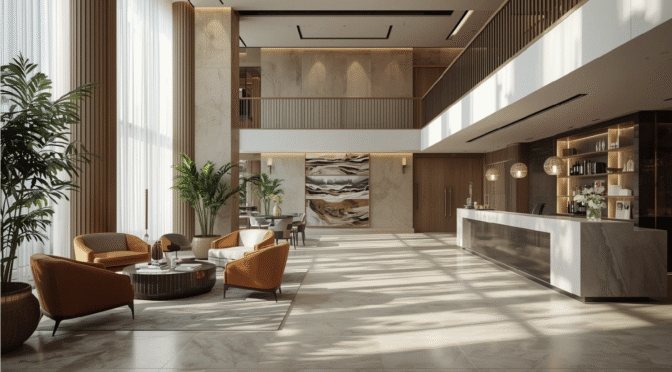
A hotel is not designed simply to look attractive. It must create an experience that reflects the brand, meets guest expectations, and supports efficient operations. Whether it is a boutique hotel, luxury resort, or budget accommodation, careful planning and execution are essential to success.
In London’s highly competitive hotel market, design plays a critical role. Guests often form opinions within minutes of arrival. Therefore, the environment must deliver comfort, clarity, and a strong first impression from the start.
This guide outlines seven key design considerations that help create memorable and high-performing hospitality spaces.
1 . Guest Experience and Flow
Hotel design should anticipate and improve the guest journey — from check-in to check-out.
Clear signage, a welcoming reception, and intuitive routes to lifts, rooms, and amenities all matter. The lobby sets the tone, so a well-planned layout supports both comfort and convenience.
In real hospitality projects, guests feel more at ease when public areas are visually open and routes are easy to understand. This reduces confusion and unnecessary movement.
Space planning that is done efficiently is very important in this case; while the area is calm and guests feel comfortable, the operations of the staff are still undisturbed.
2 . Aesthetic Identity and Branding
A hotel’s design identity must be clear and in accordance with its brand positioning—luxury, modern, boutique, or eco-friendly—and understanding Luxury vs Budget-Friendly Hotel Design: 5 Key Differences helps ensure that every design decision communicates the right message, meets guest expectations, and supports the hotel’s market positioning.
Consistency across guest rooms, corridors, and public areas strengthens brand recognition. Moreover, it helps guests build an emotional connection with the hotel.
A thorough and professional colour consultation is done so that the different zones can have a distinctive nature while the colours remain coordinated.
3 . Room Functionality and Comfort
Guest rooms must feel comfortable, practical, and inviting. Today’s travellers expect more than just a bed.
Key considerations include:
-
Ergonomic furniture
-
Soundproofing
-
Adjustable lighting
-
High-quality bedding
-
Integrated technology (USB outlets, smart TVs, smart lighting)
Smart furniture layouts and efficient storage maximise space, which is vital in urban hotels.
Thoughtful placement of lighting and equipment also improves comfort and reduces noise disruption, increasing overall satisfaction.
4 . Lighting Design
Lighting design strongly influences mood and behaviour. A layered lighting scheme works best.
Hotels typically combine:
-
Ambient lighting for general illumination
-
Task lighting for functionality
-
Accent lighting for atmosphere and focus
Warm lighting in guest rooms promotes relaxation. Meanwhile, brighter lighting in public areas supports activity and social interaction.
Well-designed lighting can also guide movement and highlight architectural features.
5 . Sustainability and Energy Efficiency
Sustainability in design is not a passing trend—it is an absolute necessity. The hotels are going the whole hog with green measures like LED lighting, low-flow plumbing, green roofs, and organic materials, among others, to cut down on their carbon footprint and still cater to the eco-friendly travellers, often complemented by a thoughtful Feng Shui Consultation to support balance and long-term wellbeing within the space.
The decisions made regarding sustainability are not only beneficial in terms of the environment but also in terms of business, as they result in savings over the long run in operating costs.
The durability factors weighed against aesthetics in the design decisions will keep the hotel in line with the times, not only aesthetically but also in efficiency for years.
6 . Safety, Accessibility & Regulations
Safety and accessibility must come first in hotel design.
Compliance with fire safety, evacuation planning, and building regulations is essential. Accessibility features such as ramps, lifts, braille signage, and barrier-free bathrooms are also critical.
Accessible design benefits all guests and widens the hotel’s appeal. Clearly marked exits and well-planned layouts increase safety and provide peace of mind for guests and staff.
7 . Public and Social Spaces
Shared areas — including restaurants, lounges, spas, and rooftop bars — should balance comfort, function, and social interaction.
These spaces often drive revenue, so their design must consider atmosphere, flow, and guest behaviour.
London Interior Designers often consider where to place their furniture, what type of lighting and how much, and what to do with or to let be the acoustics to attract guests to these very busy areas.
Final Thoughts
The design of the hotel must be great in terms of functionality, emotion, and brand storytelling. At Oraanj Interiors, we are collaborating with the hoteliers, offering great and practical interiors that are also distinctive and timeless.
Through a full-service approach, the alignment of design, coordination, and execution from concept to completion results in spaces that perform as beautifully as they look.


