


Should I Combine My Separate Toilet and Bathroom?
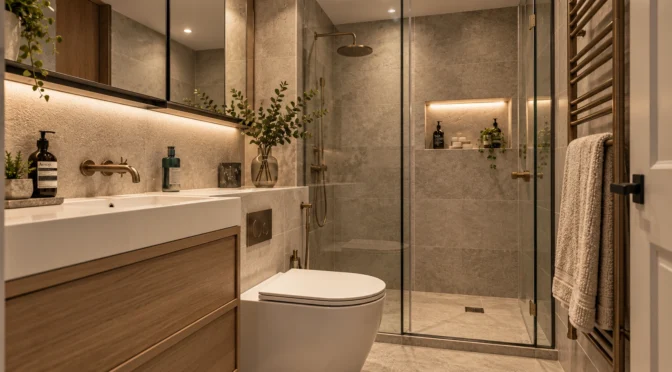
Combining a separate toilet and bathroom can give you more flexibility for a shower, storage and movement. The main trade-off is privacy: someone using the bath or shower may also make the toilet unavailable.
The decision depends on your household’s routine, whether another toilet is available and what a measured layout shows you can gain.
Will combining the rooms actually give me more space?
You gain the footprint of the dividing wall and may use the space around two entrances more efficiently. However, removing a wall does not automatically create enough room for a separate shower or double basin.
Compare measured layouts with the fittings drawn to scale. Check usable floor space, storage and door openings before deciding.
Will I lose a toilet if I combine the rooms?
Not necessarily. If you retain the existing toilet, the number of toilets stays the same.
What you lose is independent access. Someone can currently use the separate toilet while another person showers; combining the rooms changes that arrangement.
Is a separate toilet better for a family?
It can be more convenient when several people get ready at the same time, particularly if it is the home’s only toilet.
Think about your busiest morning rather than just the finished appearance. If waiting already causes problems, combining the rooms could make that worse.
When does combining the rooms make sense?
It is worth exploring when the existing rooms are awkward to use and independent toilet access is less important.
| Your situation | Option to explore |
|---|---|
| Another toilet is available elsewhere | Combining may offer useful flexibility |
| Several people share the only toilet | Retaining separate access may be preferable |
| You need a larger shower or better access | Compare both layouts with your specific needs |
| The main problem is dated finishes | Refurbishing the rooms separately may be sufficient |
Unsure what you would gain? Oraanj’s space planning service can help compare the options before building work begins.
Can I remove the wall between the rooms?
Have the wall assessed before assuming it can be removed. Its structural role, concealed services and any other relevant functions need checking.
Planning Portal advises that building regulations normally apply to removing internal walls. Confirm the requirements for your proposal with building control and the appropriate professionals.
Do I need permission to combine a bathroom and toilet in a flat?
Check your lease before commissioning alterations. It may restrict the work or require written landlord consent, particularly where walls or shared parts of the building are affected.
The Leasehold Advisory Service confirms that landlord consent can be necessary even when planning permission or building regulations approval has already been obtained.
What makes the renovation more expensive?
Costs depend on more than removing the dividing wall. Structural work, drainage changes, electrical alterations, ventilation, waterproofing and replacing finishes can all affect the scope.
Ask for an itemised quotation that includes making good both rooms. Compare a layout that retains the toilet’s position with one that relocates it before committing.
Can I keep the toilet in its existing position?
Possibly, and it is a useful option to test first. Keeping the position may reduce the extent of drainage alterations, although the existing installation still needs assessment.
Plan the basin, bath or shower around workable connections and clearances. Planning Portal notes that drainage and electrical work within a bathroom refit may require building regulations approval.
Can I improve the bathroom without removing the wall?
Yes. Different fitting sizes, better storage or an adjusted door arrangement may improve the room while retaining separate toilet access.
Check the full installed dimensions of products. A wall-hung toilet still needs space for its frame and cistern, while a sliding door needs a suitable wall or pocket arrangement.
Should I add another toilet before combining the rooms?
If independent toilet access is important, investigate whether another WC is feasible before approving the combined layout. A small available space is only the starting point; drainage, ventilation and access also need assessment.
Compare the cost and disruption of both projects with simply improving the existing rooms separately.
How do I choose the right layout?
Ask three questions: can someone still access a toilet while the bathroom is occupied, what usable space will you gain, and what work is needed to achieve it?
Combine the rooms when the practical improvement justifies the loss of separate access. Keep them separate when simultaneous use matters more.
Planning a bathroom refurbishment in London? Explore Oraanj’s bathroom renovation service or discuss your project with us. Share your floor plan, photographs and priorities so we can help assess the layout and delivery requirements.

