


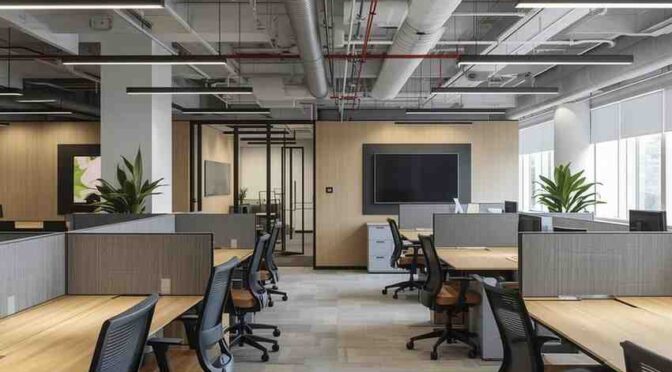
In today’s competitive London business environment, the design of your workspace is more than just aesthetics—it directly impacts employee productivity, collaboration, and overall company performance. A well-designed office fosters creativity, reduces stress, and creates an environment that aligns with your company’s brand and culture.
Workspace interior design in London is about combining function, comfort, and style to create an environment that enhances efficiency while leaving a lasting impression on clients and employees alike. At Oraanj Interiors, we specialise in Modern Office Design in London, delivering spaces that are both practical and inspirational. Our expertise spans from initial concept development to full implementation, ensuring every project supports your business goals.
Here’s how smart workspace interior design can transform your London office in 2025.
1. Optimised Layouts for Enhanced Productivity
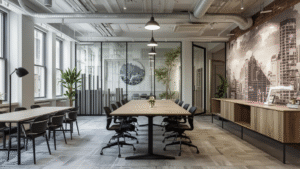
One of the most crucial elements of workspace design is layout. A well-planned office layout ensures smooth workflow, reduces distractions, and improves employee efficiency. In London offices, where space can be at a premium, careful space planning is essential.
Key considerations for smart layouts include:
- Open-plan spaces for collaborative teams
- Quiet zones for focused work
- Flexible meeting rooms adaptable to multiple functions
- Reception areas that reflect your brand and welcome clients
Office Design London projects often integrate circulation flow mapping to ensure that teams can work efficiently while minimising bottlenecks. Well-considered layouts also accommodate different work styles, from brainstorming sessions in collaborative areas to deep focus in private pods.
Additionally, layouts should be informed by Technical CAD Drawings, which allow designers to visualise spatial arrangements, evaluate ergonomics, and anticipate potential conflicts before construction begins. This ensures that your office not only looks good but also functions effectively for every employee.
Check out our Office Interior Design Portfolio for examples of optimised layouts that balance collaboration and privacy.
2. Furniture and Ergonomics
Workspace furniture plays a critical role in employee well-being and productivity. Modern London offices increasingly prioritise ergonomic and flexible furniture solutions that adapt to hybrid working models.
Furniture tips include:
- Adjustable desks and ergonomic chairs to prevent strain
- Modular seating to accommodate various team sizes
- Multi-purpose furniture for collaborative and breakout areas
- Smart storage solutions to maintain a clutter-free workspace
Incorporating ergonomic design improves comfort, reduces fatigue, and enhances employee satisfaction. Office Design projects often combine high-quality materials with flexibility, ensuring that furniture layouts can evolve alongside the company’s growth.
Integrated technology, such as built-in charging points and cable management, further enhances usability, keeping workspaces organised and efficient.
3. Incorporating Brand Identity
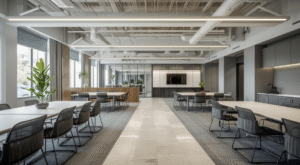
Your office is an extension of your brand. Thoughtful interior design helps reinforce company identity and creates a professional image that impresses clients. Office Branding London: How Interiors Strengthen Company Identity is increasingly recognised as a strategic tool for communicating values, culture, and credibility through space.
Ways to incorporate branding:
- Brand colours in walls, furniture, or accents
- Custom artwork or installations reflecting company values
- Feature walls in reception or meeting rooms
- Logo integration through signage or design elements
Commercial Office Design in London frequently includes bespoke solutions that subtly convey brand ethos while maintaining a neutral, professional aesthetic. The result is a workspace that communicates your values to both employees and visitors, fostering pride and cohesion.
Lighting, materials, and spatial planning can also enhance brand storytelling, making the office a key part of corporate identity.
4. Lighting and Ambience
Lighting Design is fundamental in shaping the mood, productivity, and overall experience of a workspace. Properly designed lighting reduces eye strain, enhances focus, and highlights architectural and design features.
Tips for effective lighting:
- Maximise natural light with open layouts and glass partitions
- Use task lighting in work areas to reduce fatigue
- Highlight key areas such as reception or conference rooms with accent lighting
- Opt for energy-efficient, adjustable LED lighting solutions
A well-executed Lighting Design integrates with layouts and furniture to create a balanced environment. By coordinating lighting with Technical CAD Drawings, designers can precisely position fixtures, ensure uniform illumination, and enhance spatial perception.
Lighting can also be layered to accommodate different times of day and activities, contributing to a comfortable and visually appealing workplace.
5. Technology Integration
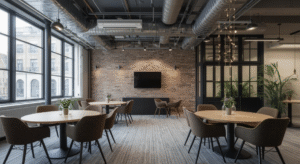
Modern London offices rely on technology to streamline workflows, improve collaboration, and support hybrid teams. Smart integration ensures the office functions efficiently while maintaining a sleek, uncluttered look.
Tech solutions include:
- Video conferencing equipment for remote collaboration
- Smart lighting and climate control systems
- Digital booking systems for meeting rooms
- Integrated AV and presentation technology
Modern Office Design projects carefully embed technology into furniture, partitions, and ceilings, maintaining an organised and aesthetically pleasing environment. Combining these solutions with M&E Electrical AutoCAD Drawings allows precise coordination between power, data, and lighting, avoiding conflicts and optimising installation efficiency.
6. Flexible and Future-Proof Spaces
London’s dynamic business environment demands office layouts that can evolve. Designing flexible spaces allows for easy expansion, reconfiguration, and adaptation to new ways of working.
Strategies include:
- Modular partitions and furniture
- Multi-purpose zones for meetings, events, or quiet work
- Open collaboration areas that can evolve with team growth
By integrating flexibility into the core design, offices remain practical and inspiring as organisational needs change. Commercial Office Design prioritises adaptability, ensuring spaces remain functional, cost-effective, and modern over time.
7. Partner With Workspace Interior Design Experts
A successful office design project requires careful oversight. Interior Design Project Management ensures that every stage, from concept to completion, is delivered efficiently, on time, and within budget.
Key elements include:
- Coordinating consultants, contractors, and suppliers
- Ensuring Technical CAD Drawings are implemented accurately
- Managing M&E Electrical AutoCAD Drawings and integration with building services
- Maintaining design intent throughout construction
Effective project management minimises risk, avoids delays, and guarantees that the final workspace meets both aesthetic and functional goals. Our team provides end-to-end guidance, ensuring a seamless experience for clients undertaking Office Design London projects.


