


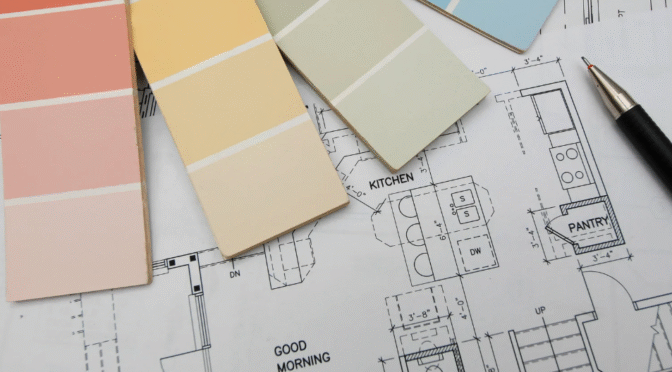
Interior design goes beyond the selection of colours and placement of furniture to consider the rationale and synthesis of aesthetic appeal and practicality, and to create comfortable spaces. Interior spaces require an understanding of the 7 basic principles of interior design to be meaningful and effective.
From the point of view of Interior Designers in London, these principles take on even greater significance in relation to micro-space living in urban environments. In an Interior Design Studio, good space planning and Detail in lighting design can make the difference between a luxurious or cramped room.
1 . Space
Space is the initial component of any design. It is the physical boundaries of a given area. It encompasses the length, width, and height of the area. There are two types of space:
Positive space: furniture and decoration arrangement.
Negative space: Spaces that provide an element of breathing room.
Managing these two factors creates harmony and avoids messiness and blank spaces.
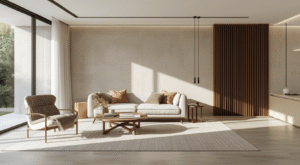
In Effective Space Planning, circulation routes, proportions, and the actual use of the room for day-to-day living are taken into account to provide comfort and functionality within the space. This approach highlights What is Spatial Design and Why Does it Matter?, as thoughtful spatial planning directly influences how a room feels, functions, and adapts to everyday living.
2 . Line
Lines define shapes and direct the eye. In interior design, lines are provided by architecture, furniture, and accessories. They are classified as:
Horizontal lines: Convey stability and calmness (for example, tables, beds).
Vertical lines: Suggest height and formality, such as doors and windows.
Dynamic lines: These are found in curves and diagonals, adding movement and energy.
Softening strong architectural lines with softened furniture or textiles often helps smaller rooms feel less rigid and more inviting in real-world projects.
3. Form
Form is the shape of a room’s objects, from structural features down to furniture and décor. Forms can be:
Geometric: Sharp, clean lines (e.g., squares, rectangles).
Organic: Natural, irregular shapes [e.g., plants, flowing curves].
A well-designed room will often use a mix of both to keep the room balanced and engaging.
See related content: Modern vs. Contemporary: What’s the Difference when it comes to Interior Design?
Blending structured forms with softer organic elements will help to make sure that modern apartments do not feel too clinical.
4. Light
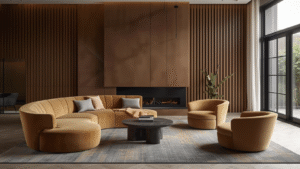
Lighting is an essential factor that can affect mood, functionality, and aesthetic appeal. There are three types:
Ambient lighting: Lighting of the space.
Task Lighting: Lighting needed to perform a specific task.
Accent lighting: Used to highlight specific features or objects, such as architectural features and artwork.
Layered lighting can also provide depth, allowing the creation of an atmospheric scene.
Thoughtful lighting design helps rooms transform smoothly from daytime activities to nighttime leisure time.
5 . Colour
Colour prompts emotions, forms visual relationships, and expresses style. It can facilitate more expansive, cosy, cold, or snug environments.
Think of Colour psychology (e.g., blues for calmness, yellows for energy).
60-30-10: How to balance dominant, secondary, and accent colours. Inspiration: The Complete Guide to Interior Design Trends for 2026.
A professional Colour Consultation could be beneficial in interpreting personal preferences to create a scheme that also complements the effects of natural lighting and the existing architecture.
6 . Texture
Texture brings depth to a given space or dimension in either a visual sense (the appearance of something) or a tactile sense (the feel of something). Examples of texture include:
Soft Textures: Cushions, rugs, velvet
Hard Textures: Stone, Glass, Metal
Textural layering creates more engrossing and richer interior spaces.
A blend of smooth finishes and tactile textures helps prevent the interior from looking too minimalist, especially when colours are monochromatic.
7 . Pattern
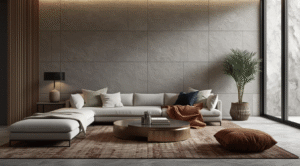
Patterns add a dimension of rhythm, movement, and character. Patterns can be applied as wallpapers, fabrics, rugs, and tiles. Similar to texture, patterns need to be applied within limits so that they do not overpower.
Enhance your design: Furniture Selections — selecting appropriate pieces to complement the harmony of space, form, and texture.
Sometimes it takes a little repetition in the pattern elements across various surfaces to open up the room.
Bringing It All Together
Master these 7 fundamentals of interior design, and you will be able to make over a space with creativity and intention. Whether you’re styling a home or a commercial space, these principles are at the root of all great design.
With Studio More as an established Interior Design Studio in London with projects recognised through awards, we have seen firsthand how these fundamentals consistently applied lead to beautiful, visually appealing, and highly functional interiors.
Guided by either the expertise of a Luxury Interior Designer in London or supported through the Full Service approach that integrates layout, light, and materials, these basics remain the foundation of successful interiors, from concept to completion.
Need professional advice? At Oraanj Interiors, we help clients take design concepts and bring them to life as functional, beautiful realities. Reach out today to start your interior transformation process.


