


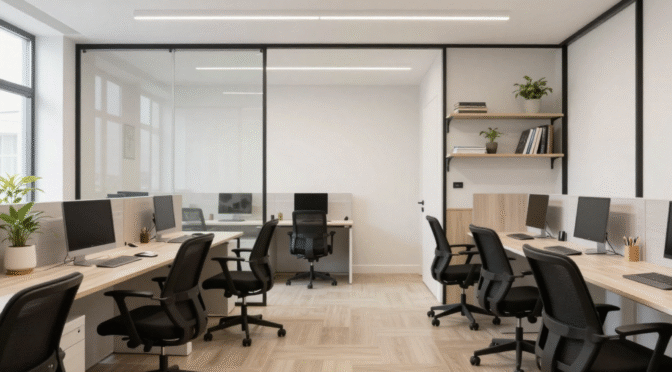
A small office in London doesn’t have to feel cramped, restrictive, or limit productivity. With the right design strategy, even the most compact workspace can feel modern, efficient, and inspiring. This is where Interior Design for Small Spaces: Stylish Solutions That Maximise Every Inch becomes essential — especially in a city where commercial space comes at a premium and every square metre must work harder.
At Oraanj Interior Design, we specialise in Office Design London, helping businesses reimagine small offices through clever layouts, multifunctional furniture, and tailored storage solutions. By combining practical planning with contemporary aesthetics, we ensure that every square metre works harder for your team.
In this guide, you’ll discover practical small office design ideas tailored for London businesses, along with real-world solutions we implement across the city to improve workflow, comfort, and overall performance.
Why Small London Offices Need Strategic Design?
Commercial space in London is both valuable and limited. Many businesses operate from compact offices, coworking environments, or older buildings with challenging layouts, low ceilings, or limited access to natural light. Without a strategic design approach, small offices can quickly become inefficient and uncomfortable.
Common challenges include:
- Cluttered desks and storage overflow
- Poor circulation and awkward movement paths
- Uncomfortable or unsuitable seating
- Insufficient or poorly placed lighting
- Underutilised vertical space
- Reduced productivity and staff morale
Thoughtful Commercial Office Design addresses these issues holistically. By understanding how teams work day-to-day, designers can create environments that improve efficiency rather than hinder it. Strategic planning ensures that small offices support business growth rather than limit it.
Our portfolio demonstrates how even the most constrained spaces can be transformed through careful space planning, intelligent furniture choices, and a strong understanding of how people interact with their work environment.
1. Choose a Layout That Maximises Flow
The layout is the foundation of any successful small office design. In compact London offices, poor layouts can cause congestion, disrupt focus, and waste valuable floor area. Selecting the right configuration ensures smooth movement and supports different working styles.
Popular layout options include:
🔹 Linear Layout
Desks positioned along walls help free up central circulation space, making narrow offices feel more open and organised. This approach works particularly well for teams that require minimal interaction during focused tasks.
🔹 L-Shaped or Corner Workstations
Ideal for maximising awkward corners, these layouts provide generous work surfaces while accommodating storage and equipment without dominating the room.
🔹 Hot-Desking Zones
Unassigned seating encourages flexibility and reduces the number of desks required. This setup is especially effective for hybrid teams and helps minimise clutter in smaller offices.
A well-planned layout supports Modern Office Design by balancing functionality with a clean, uncluttered aesthetic. When flow is prioritised, employees can move comfortably, collaborate easily, and work more efficiently.
2. Use Vertical Space to Reduce Desk Clutter
In small offices, floor space is precious. One of the most effective strategies is to look upwards and utilise vertical surfaces to their full potential.
Vertical solutions include:
- Full-height shelving units
- Wall-mounted cabinets and cupboards
- Suspended file storage systems
- Pegboards for office accessories
- Wall-mounted task lighting
By moving storage off desks and floors, offices instantly feel more spacious and organised. Clear surfaces reduce visual noise, helping employees focus better throughout the day.
Vertical design also creates opportunities to incorporate branding, colour accents, or subtle decorative elements without overcrowding the space.
3. Choose Multifunctional & Modular Furniture
In a compact office, every piece of furniture must earn its place. Multifunctional and modular furniture allows businesses to adapt their space as needs change without constant refits.
Smart furniture solutions include:
- Foldable or wall-mounted desks
- Modular bench systems that can expand or contract
- Storage-integrated seating
- Sliding-door storage units to save clearance space
- Mobile furniture that can be rearranged easily
This approach is particularly effective when supported by clear Technical CAD Drawings, which allow layouts and furniture configurations to be tested before installation. Accurate drawings help avoid costly mistakes and ensure furniture fits perfectly within tight dimensions.
Multifunctional furniture not only saves space but also supports flexibility as teams grow or working patterns evolve.
4. Glass Partitions for an Open, Airy Feel
Solid walls can make small offices feel boxed in and disconnected. Glass partitions are a popular solution for London offices where natural light is often limited.
Benefits of glass partitions include:
- Allowing daylight to flow deeper into the space
- Creating visual openness while maintaining separation
- Improving team visibility and communication
- Offering privacy through frosted or acoustic glass
Glass partitions are particularly effective in meeting rooms, manager offices, or quiet zones. They help define spaces without compromising openness, making small offices feel larger and more welcoming.
5. Improve Productivity With Lighting
Lighting plays a crucial role in employee comfort, concentration, and overall wellbeing. In small offices, poor lighting can exaggerate tight spaces and cause eye strain or fatigue.
Effective lighting strategies include:
- LED task lighting at workstations
- Wall-mounted lights to free up desk space
- Slimline ceiling panels for even illumination
- Motion-sensor lighting in corridors and storage areas
Thoughtful Lighting Design ensures that each area receives the right level of illumination for its function. Balanced lighting reduces shadows, enhances mood, and contributes to a healthier working environment — particularly important in offices with limited natural light.
6. Add Compact, Effective Meeting Zones
Even the smallest office needs space for collaboration. Meetings don’t always require a traditional boardroom; compact solutions can work just as effectively.
Space-efficient meeting options include:
- Glass meeting pods
- Booth-style seating for informal discussions
- Foldable or wall-mounted meeting tables
- Standing meeting zones to encourage quick catch-ups
- Corner nooks designed for small group collaboration
By planning meeting areas carefully, businesses can encourage teamwork without sacrificing valuable workspace. Successful implementation often relies on strong Interior Design Project Management, ensuring coordination between layout, furniture, acoustics, and lighting.
7. Bring in Biophilic Elements Without Using Floor Space
Introducing nature into the workplace has been shown to improve mood, reduce stress, and enhance productivity. In small offices, plants can still be incorporated without taking up precious floor area.
Space-saving biophilic solutions include:
- Hanging planters from ceilings or shelves
- Wall-mounted green panels
- Slim vertical plant towers
Even subtle natural elements can soften the workspace and create a more calming atmosphere, helping teams feel more comfortable and engaged throughout the day.
8. Use Brand Colours Strategically
Colour has a powerful impact on how space is perceived. In small offices, the right palette can make rooms feel brighter, larger, and more cohesive.
Key principles include:
- Light neutral tones to visually open up the space
- Accent colours used sparingly for brand recognition
- Soft textures and finishes to add warmth and balance
Strategic colour placement can define zones, reinforce brand identity, and improve overall visual harmony without overwhelming the space.
9. Smart Storage Keeps the Office Tidy
Storage is often the deciding factor between a cramped office and a functional one. Smart storage solutions keep workspaces tidy and ensure everything has its place.
Effective compact storage options include:
- Under-desk filing units
- Floating shelves
- Hidden storage walls
- Mobile pedestal units
- Built-in cabinetry tailored to the space
When storage is well-integrated, clutter disappears and the office instantly feels calmer and more spacious.
Precise coordination with M&E Electrical AutoCAD Drawings ensures storage, lighting, and power points work seamlessly together, avoiding conflicts during installation.
Final Thoughts
Small office design in London requires a careful balance of creativity, strategy, and functionality. With the right layout, intelligent furniture choices, thoughtful lighting, and smart storage solutions, even the most compact workspace can feel modern, comfortable, and productive.
By approaching design holistically and planning every detail, businesses can turn spatial limitations into an advantage — creating offices that support wellbeing, collaboration, and long-term success.


