


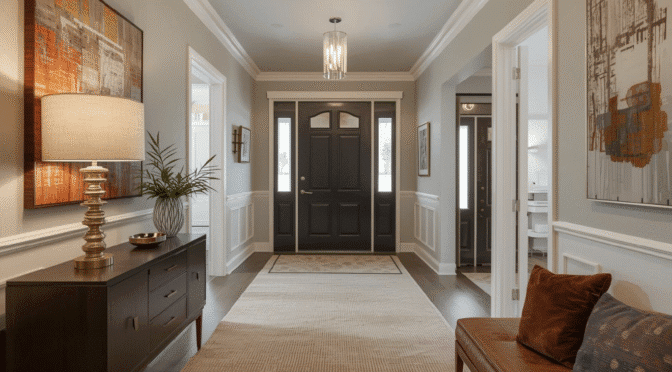
Hallway Decorating Ideas: How to Create a Brighter, More Practical Entrance
Shoes collect by the door, the hallway feels dark, and the staircase looks disconnected from the rest of the home. These are common entrance problems, particularly in narrow London terraces and compact flats.
The most effective hallway decorating ideas combine clear walkways, useful storage, well-positioned lighting and a consistent colour palette. Start with how you use the entrance, then choose furniture and finishes that support your daily routine.
At Oraanj Interior Design, our interior designers in London consider the hallway and staircase together, connecting the entrance with the rooms beyond.

How Do You Make a Hallway Look Welcoming?
Give the entrance a clear purpose: somewhere to arrive, put down essentials and move comfortably into the home.
Before choosing wallpaper or accessories, identify what needs a place. Shoes, coats, keys and bags should be easy to store without spilling into the walkway.
A welcoming hallway might include:
- A shallow cupboard for everyday shoes.
- A small shelf or console for keys.
- A mirror positioned to reflect light.
- Lighting that illuminates the entrance evenly.
- One artwork or decorative feature.
You do not need every item. In a small entrance, a wall-mounted shelf and concealed shoe storage may work better than a console table and bench.
What Are the Best Hallway Decorating Ideas for Narrow Spaces?
Choose shallow furniture, keep the floor clear and avoid placing bulky items along the main walking route.
A console may fit against the wall but still make the hallway awkward when someone is carrying shopping or opening the front door. Check how the space works with doors, drawers and cupboards open.
For a narrow hallway, consider:
- Wall hooks where they will not obstruct movement.
- Slim shoe cupboards instead of deep cabinets.
- A floating shelf instead of a freestanding table.
- One larger mirror rather than several small decorations.
- Storage within existing recesses.
Our guide to narrow hallway ideas explores ways to furnish difficult entrances without overcrowding them.
Which Colours Work Best in a Dark Hallway?
Warm off-whites, soft greige and muted stone shades can help a dim hallway feel lighter. Deeper colours can also work if you want a more enclosed, atmospheric entrance.
The right choice depends on daylight, artificial lighting and the colours visible in adjoining rooms. Bright white does not automatically make a dark hallway feel welcoming.
Test large paint samples in several positions. Check them near the front door, beneath the staircase and under evening lighting before committing.
A colour consultation can help coordinate walls, woodwork and flooring, particularly where the entrance connects several rooms.

How Should You Decorate Hallway Walls?
Choose one main approach—artwork, wallpaper or panelling—and give it enough space to be appreciated.
Adding several competing features can make a narrow hallway feel busy.
Should You Use a Gallery Wall?
A gallery wall works well when the arrangement feels intentional. Choose a shared frame finish, colour palette or theme to connect photographs and artwork.
Lay out the arrangement on the floor first. Along a staircase, position the frames so they relate to the rising steps rather than appearing scattered.
Is Wallpaper Suitable for a Small Hallway?
Yes. Wallpaper can add character without using floor space. A subtle texture provides a quieter backdrop, while a stronger pattern can turn the entrance into a focal point.
Consider how the pattern looks beside door frames, switches and the adjoining rooms.
Can Panelling Improve a Hallway?
Panelling can introduce texture and connect the hallway with the staircase. Keep its proportions appropriate to the space: deep mouldings may feel intrusive in a narrow corridor, while simpler detailing can provide definition without adding bulk.
Where Should You Put a Mirror in a Hallway?
Place a mirror where it reflects something worth seeing, such as daylight, artwork or a clear view into another room.
Above a console is a practical option, but it is not the only one. A tall mirror on a side wall can work well where there is no room for furniture.
Before fixing it, check the reflection from the front door. Reflecting a crowded coat rack or open cupboard can make the entrance appear busier.
A mirror redistributes available light; it cannot replace a suitable lighting scheme.
How Can You Add Hallway Storage Without Making It Feel Smaller?
Plan storage around the items you use most often and the space they actually need.
Shoes, coats and cleaning equipment require different depths and internal arrangements. A cupboard that looks neat outside may still be frustrating if everything ends up piled together.
Useful options include:
- Under-stair drawers for shoes and accessories.
- A tall cupboard for coats.
- A bench with storage beneath, where space allows.
- Separate compartments for each household member.
- Concealed shelves for items used less frequently.
Explore our hallway storage ideas for ways to organise everyday essentials while keeping the entrance clear.
How Can You Update a Staircase Without Replacing It?
A staircase can often feel substantially different through changes to its finishes, lighting and surrounding walls.
Depending on its condition, options may include refinishing timber, repainting existing components, adding a fitted runner or updating the wall decoration alongside it.
For example, a timber handrail, neutral runner and carefully positioned wall lights can connect an older staircase with a refreshed interior.
Replacing balustrades, changing the stair layout or opening up the surrounding space requires a more detailed assessment. Our interior architecture service considers these changes alongside circulation, the existing structure and specialist input where needed.
Which Staircase Design Works Best in a Small Home?
The best staircase fits the available space while remaining comfortable for everyday use.
A spiral staircase can have a compact footprint, but it may be less convenient for carrying furniture or moving between floors. A curved staircase creates a different effect and usually needs more generous space.
Glass balustrades can preserve views and allow light through, although they also require regular cleaning. Open designs need careful assessment rather than being chosen solely for appearance.
Before considering replacement, establish whether the existing staircase could work better with improved lighting, storage and finishes.
What Are the Best Staircase Lighting Ideas?
Combine lighting that makes the steps clearly visible with softer lighting that highlights the staircase’s shape and materials.
Useful options include:
- Wall lights to illuminate the stair flight.
- Recessed step lights for focused illumination.
- Concealed LED lighting beneath a handrail.
- A pendant within a suitably proportioned stairwell.
- Landing lighting that connects the upper and lower floors.
Position fittings to avoid glare and distracting shadows. A decorative pendant may create a focal point, but it should not be the only source of light.
Plan switching so the lighting is convenient to operate from both ends of the staircase. A coordinated lighting design should consider daytime use, evening atmosphere and visibility together.
What Flooring Works Well in Hallways and on Stairs?
Choose flooring according to foot traffic, cleaning needs, comfort and the character of the home.
Porcelain tiles can suit busy entrances, while timber can create continuity with adjoining rooms. A stair runner introduces softness and texture, provided it is securely fitted and suitable for stair use.
Compare samples beside your wall colour and staircase finish. Also consider how the material looks when wet or marked by everyday use, rather than judging it only from a showroom sample.
What Hallway Decorating Mistakes Should You Avoid?
The most common mistakes come from choosing individual pieces before checking the overall layout.
Avoid:
- Furniture that restricts door openings or movement.
- Storage that is too small for everyday belongings.
- Mirrors that reflect clutter.
- Lighting that leaves steps or corners in shadow.
- Too many competing colours, patterns and finishes.
- Staircase changes based on appearance alone.
A useful starting point is to photograph the entrance as you normally use it. This often reveals where bags accumulate, furniture interrupts movement or lighting falls short.
How Can Oraanj Help Transform Your Hallway and Staircase?
Oraanj can help plan the layout, storage, lighting and finishes as one connected scheme. Where the project involves fitted joinery or wider refurbishment, our design and build service can coordinate the design with the work needed to deliver it.
Share photographs, available measurements and the main problems with your entrance. Contact Oraanj Interior Design to discuss how your hallway and staircase could work better for your home.

