


Interior Design & Build in Barbican
Thoughtful refurbishment for modernist homes and commercial spaces in the City of London.
Oraanj provides residential interior design and build and commercial interior design and build and build services in Barbican. We help apartment owners improve layouts, storage, kitchens and lighting, alongside designing officescafés, shops and other business interiors in the surrounding area.
Oraanj provides comprehensive architectural services across the estate, from residential interior design to handcrafted bespoke architectural joinery. We start with your priorities and develop a clear, coordinated plan for your space.
Choose design-only supportdesign and sourcing, or a full-service interior design package covering the agreed refurbishment, procurement and installation.

A Home That Feels Like You, and Belongs in Barbican
People choose Barbican for its distinctive architecture, cultural setting and sense of place. Updating a home here should begin with understanding what makes it special.
You may want a more practical kitchen, space for books and artwork, improved lighting or a discreet place to work. The starting point is to identify what should be retained, what no longer works and where a carefully considered change would make the greatest difference.
Led by founder and creative director Rachana Gupta, Oraanj serves Barbican and surrounding areas including Aldersgate, Moorgate, Smithfield and Clerkenwell. Our studio is an SBID-accredited practice and winner of Interior Designer of the Year at the Eastern Eye Property Awards 2025.
Alongside our architectural interior work in Barbican, our studio regularly undertakes residential and commercial commissions across neighbouring areas including London BridgeShoreditchand Whitechapel.
Our Barbican Residence Design
Warm Materials Within a Strong Architectural Setting
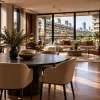
Our Barbican residence design scheme brings together living, cooking and dining spaces through a co-ordinated palette of walnut, stone and warm leather tones.
The design includes a central marble island with preparation space, induction cooking and breakfast seating. Walnut cabinetry provides storage and introduces warmth alongside the textured concrete backdrop. Track lighting and integrated joinery lighting give different parts of the room their own emphasis.
The approach balances visual character with everyday use: places to prepare food, gather, store belongings and relax are considered together.
Location
Barbican Estate, City of London
Featured spaces
Living, kitchen and dining areas
Material palette
Walnut cabinetry, marble surfaces and cognac leather seating
Design priorities
Kitchen functionality, integrated storage, lighting and a coherent interior
Explore our full Barbican residential case study to view the complete transformation and bespoke detailing.
What Clients Say About Oraanj
“I recently had the pleasure of working with Oraanj Interior Design to redesign my living room and kitchen. I was so impressed with their professionalism, creativity, and attention to detail.”
Anj Pitakandage · ★★★★★ Google review
“They demonstrated strong organisational skills, adhered to timelines, and managed the budget effectively.”
SagarK-6 · Five-star Yell review · 14 October 2023
Do I Need Permission to Refurbish a Barbican Flat?
Check both landlord approval and listed building consent before committing to alterations. These are separate processes, and the requirements depend on the proposed work.
Our integrated design and build services bring design decisions and the agreed building work into one coordinated scope.
The Barbican Estate’s buildings are Grade II listed. Its protection is not limited to external façades: internal features and layouts can also contribute to the building’s special interest.
The City of London’s guidance should be consulted before planning changes to partitions, original fittings or other building fabric. Some works may require listed building consent, while other proposals may not. Building regulations requirements must also be considered separately.
A useful first step is to gather:
- Your existing floor plan and photographs.
- A description of the changes you want to make.
- Information about original features and previous alterations.
- Any existing approvals or relevant property documents.
Oraanj can include interior architecture and application support within the agreed scope, with specialist advice arranged where required.

Can I Improve My Barbican Kitchen Without Changing the Whole Layout?
Often, the most useful improvements begin within the existing footprint. Cabinet organisation, appliance placement, worktop space and lighting should be assessed before assuming walls or services need to move.
We consider how you cook, what you need to store and whether the kitchen should remain separate or connect more closely with adjoining spaces. Where original fittings survive, their significance and the applicable guidance need to inform the proposal.
Moving a kitchen or adding an island requires more than a furniture layout. Drainage, power, ventilation, circulation and any necessary permissions must be assessed before the kitchen interior design is confirmed.
For some homes, retaining the existing arrangement and improving its functionality will be the most appropriate solution.
What Should I Consider Before Changing Flooring or Adding Fitted Storage?
Flooring and joinery need to be planned around the building’s services as well as its appearance.
The Barbican Estate’s background heating uses electrical cables within the floors. The City of London advises residents not to make fixings that penetrate the floors because they could damage these cables. Flooring and underlay also affect heat transfer.
Before specifying a new floor, establish its compatibility with the heating system and the applicable estate requirements, including acoustic considerations. An underlay’s advertised sound-reduction figure alone does not establish that a complete floor construction is suitable.
For fitted storagewe consider fixing methods, access to services, ventilation and the treatment of original features. Freestanding furniture designs may be appropriate in some spaces, while fitted elements need properly assessed installation details.
Commercial Interiors Around Barbican
Oraanj also designs commercial interiors in Barbican and the surrounding City neighbourhoods.
For a coordinated brief from the outset, speak to our London interior designers.
An office near Moorgate may need a better balance of workstations, meeting rooms and quiet areas. A café near Smithfield may need clearer customer circulation, practical service space and durable finishes. Each brief starts with how the business operates and who uses the premises.
Our services can include design and build servicesinterior design and buildtechnical information, furniture sourcing and fit-out delivery within the agreed scope.
Design Only
Clients who have their own contractor or want to organise implementation
Layouts, concepts, finishes, specifications and selected drawings or visualisations
Design + Sourcing
Clients who want help selecting and purchasing furniture and finishes
Design development, product selection, procurement support and delivery coordination
Full-Service Design & Build
Clients seeking support through refurbishment and installation
Design, technical information, agreed building works, procurement, coordination and handover
Your proposal explains the deliverables, fees, construction responsibilities and any separate specialist appointments.
Contact Oraanj Interior Design – Barbican
Planning an apartment refurbishment, whole-home redesign, or commercial interior in Barbican? Contact our design studio to discuss your space and schedule an initial consultation.
Studio Address: Aldersgate Street, Glasshouse Yard, London EC1A 4JN
To help us prepare for your enquiry, please share:
- Planning an apartment refurbishment, a kitchen update or a commercial interior in Barbican? Contact our Barbican team to discuss your space, priorities and the level of support you need.
- Oraanj Interior Design – Barbican
- We provide interior design, space planning, sourcing and agreed refurbishment support for residential and commercial projects in Barbican and surrounding areas, including Aldersgate, Moorgate, Smithfield and Clerkenwell.
- Your property’s block or street and postcode.
- A floor plan and photographs, if available.
- The rooms or commercial spaces you want to improve.
- Your approximate project budget and preferred timescale.
- Any existing approvals or information about original features.
Speak directly with our senior designers:
Frequently Asked Questions
Removing, altering or adding internal partition walls in a Barbican flat requires listed building consent under the estate’s published guidance. Landlord approval is also required for proposed alterations. Structural changes may additionally require Building Regulations approval and specialist assessment.
Yes. The City of London Corporation requires an application for landlord approval before alterations to a Barbican Estate property. The application should describe the proposed works and include relevant drawings or supporting information. Landlord approval is separate from listed building consent and Building Regulations approval.
Wooden flooring is restricted under Barbican Estate lease conditions, which generally require carpeting outside original kitchens, bathrooms and toilets. Flooring alterations must also account for acoustic requirements and the estate’s electric underfloor heating. Written confirmation of the applicable lease and landlord requirements should be obtained before selecting replacement flooring.
No. The Barbican Estate uses electric underfloor heating cables embedded within the floor construction. The City of London Corporation advises residents not to make fixings that penetrate the floors because drilling, screws or nails could damage the heating system. Flooring and joinery installation methods must account for this restriction.
Window replacement or alteration in a Barbican flat is subject to heritage and estate restrictions. Original windows contribute to the architectural character of the listed buildings, so proposals may require listed building consent and landlord approval. Replacement designs must be assessed against the estate’s published guidance before work begins.
Relocating a kitchen or bathroom can involve changes to drainage, plumbing, ventilation and the building’s original layout. Such work requires assessment against Barbican Estate alteration rules, landlord approval and applicable Building Regulations. Listed building consent may also be required where protected fabric or layouts are affected.
Alterations completed without the necessary permissions may require retrospective landlord approval or listed building consent. Approval is not guaranteed, and unauthorised work may need modification or reinstatement. Missing documentation can also create difficulties during property sales, mortgage applications and future refurbishment projects.

