


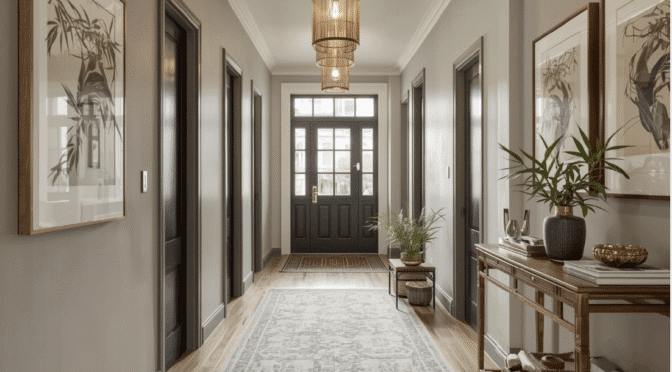
What Are the Best Feng Shui Entrance Tips for a Small London Home?
If shoes block the doorway, coats cover the walls and the hallway feels dark, arriving home can feel more frustrating than welcoming.
Start with seven practical changes: clear the entrance, improve storage, maintain the front door, layer the lighting, introduce natural textures, simplify decoration and protect the route through the space.
Feng Shui is a traditional practice concerned with harmony and the arrangement of spaces. Its ideas about energy are cultural beliefs rather than scientifically established effects on health, wealth or luck. You can still draw inspiration from it when creating a comfortable, organised entrance.

1. How Do I Keep a Small Entrance Clutter-Free?
Give everyday belongings a specific place close to where you use them. Storage should suit your household without making the entrance harder to move through.
For a compact London flat, consider:
- A shallow shoe cupboard.
- Hooks positioned away from the door swing.
- A small drawer or tray for keys.
- Closed storage for bags and seasonal accessories.
- A bench with storage, where space allows.
Keep only frequently used items near the entrance. Coats and shoes you rarely wear can be stored elsewhere.
Thoughtful space planning helps establish how much storage will fit while keeping the route clear.
2. What Makes a Front Door Feel Welcoming?
A welcoming front door is well maintained, easy to identify and comfortable to use. Start with its condition before considering decorative changes.
Check that the door opens properly and that handles, locks and surrounding finishes are in good order. Make sure furniture or loose mats do not obstruct it.
A considered colour and coordinated hardware can then connect the entrance with the interior.
You do not need a particular door colour to create a welcoming home. Choose one that works with the property, surrounding finishes and your preferences.
3. How Can I Brighten a Hallway With No Windows?
Use lighting that illuminates the route, walls and useful features. One central fitting may leave corners, storage or the area beside the door in shadow.
Depending on the space, combine:
- Ceiling lighting for general visibility.
- Wall lights to illuminate vertical surfaces.
- Integrated lighting within storage.
- A table lamp where there is a suitable surface and socket.
Warm-toned light can create a welcoming atmosphere, but brightness, positioning and glare control matter too.
A coordinated lighting design should make it easy to find keys, put on shoes and move through the hallway.
 4. Can I Add Plants to a Small Entrance?
Yes, if there is enough space and suitable light. Position plants where they will not obstruct the door, narrow the route or be knocked over.
Choose a plant for the actual conditions rather than its symbolic meaning. Consider daylight, maintenance and whether it is suitable for a household with children or pets.
If the entrance is too dark for a living plant, introduce natural texture through timber, woven baskets or botanical artwork instead.
One carefully placed feature is often enough in a small hallway.
5. Where Should I Put a Mirror in the Hallway?
Place a mirror where it is useful and reflects something you want to see, such as light, artwork or a clear part of the room.
A side wall above a shallow console can work well if there is enough circulation space. Check the reflection from the doorway before fixing it in position.
Feng Shui traditions differ in their guidance about mirrors facing entrance doors. From a practical design perspective, consider glare, privacy and what the mirror reflects.
A mirror can change the perception of space, but it cannot compensate for an obstructed layout or inadequate lighting.
6. How Much Furniture Should I Put in a Narrow Hallway?
Include only furniture that serves a clear purpose and fits without restricting movement.
Before buying a console or bench, mark its footprint on the floor. Check whether you can open doors, carry shopping and pass another person comfortably.
If a table takes up too much room, consider:
- A wall-mounted shelf.
- A recessed storage solution where feasible.
- Hooks instead of a freestanding coat stand.
- A mirror without furniture beneath it.
Our interior designers in London consider furniture dimensions alongside door swings, storage and circulation.
7. Which Colours and Materials Work in an Entrance?
Choose a small, coordinated palette that suits the available light and connects with adjoining rooms.
For example, timber can introduce warmth, painted cabinetry can keep storage visually quiet, and metal handles can provide contrast. A washable runner may soften the space where it can be positioned securely.
Avoid adding materials simply to include every traditional Feng Shui element. A practical entrance does not need water features, candles or multiple decorative objects.
Test paint samples in the hallway itself. Colours can look different under artificial light and at different times of day.
What If My Front Door Opens Straight Into the Living Room?
Create a subtle arrival area without blocking the room. A small change in furniture arrangement can establish where shoes, coats and keys belong.
Depending on the layout, you might use:
- A shallow cupboard beside the door.
- A securely positioned entrance mat.
- A small wall shelf with hooks.
- A lighting feature that identifies the arrival area.
- The back of a sofa to define the living space, where circulation allows.
The aim is to make entering the home feel organised while preserving usable floor space.
What If There Is a Wall Directly Opposite the Front Door?
Treat it as part of the arrival rather than assuming it must be removed. Artwork, carefully positioned lighting or a suitable mirror can give the wall a purpose.
First check the practical issue: is the entrance genuinely difficult to use, or does it simply feel visually enclosed?
If the layout restricts movement, an interior architecture review can explore alternatives. Structural changes or relocating an entrance should follow proper assessment rather than being treated as a quick decorative fix.

Does My Front Door Need to Face a Particular Direction?
There is no single direction that every home must face. Different Feng Shui approaches interpret direction and layout differently.
For an existing London home, focus first on what you can realistically improve: access, storage, lighting, maintenance and the relationship between the entrance and adjoining rooms.
You do not need to reposition your front door to make the entrance more comfortable or welcoming.
How Can I Improve the Path From the Gate to the Door?
Keep the approach visible, maintained and easy to navigate. Repair damaged surfaces, trim planting that obstructs the route and provide suitable lighting.
Check that the gate opens comfortably and that bins or deliveries do not block access.
There is no practical need to introduce a curved path purely for Feng Shui. The route should suit the property and the people using it, including anyone carrying luggage, pushing a buggy or using a mobility aid.
What Are the Most Common Entrance Design Mistakes?
The most avoidable mistakes are choosing furniture before measuring, adding storage that blocks movement and relying on decoration to solve a layout problem.
Other issues include:
- Poorly positioned lighting.
- Mirrors reflecting clutter or glare.
- Too many objects on small surfaces.
- Plants placed in unsuitable conditions.
- Storage that does not match everyday needs.
- Door swings obstructed by furniture or rugs.
Resolve these first, then decide whether anything else needs to be added.
Can Oraanj Help Redesign My Entrance?
Oraanj can help with entrance layouts, fitted storage, lighting, finishes and the connection to surrounding rooms.
For more extensive work, our design and build service brings design planning together with refurbishment and installation.
Discuss your entrance or hallway with Oraanj and share photographs, approximate dimensions and the problems you would like to solve.

