


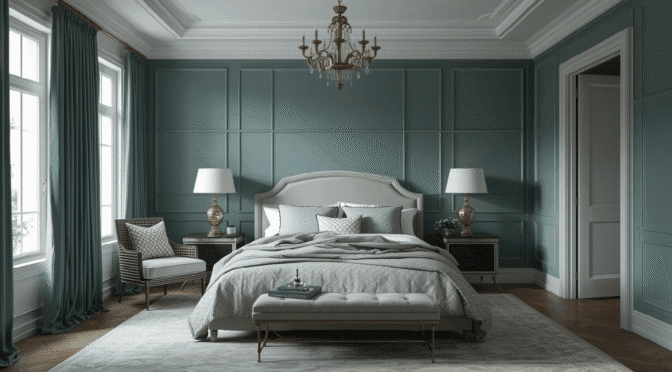
How can I use teal in my bedroom without making it too dark?
Use teal in your bedroom by testing the shade in the room and deciding how much of it you want to see. A painted wall, upholstered headboard and set of cushions each create a different level of commitment. The best choice depends on your daylight, existing finishes and the atmosphere you enjoy in the evening. Start with the furniture and flooring you are keeping, then compare teal samples beside them. You do not need to use the colour everywhere. A smaller, well-chosen element can give you the character you want while leaving plenty of room for quieter supporting finishes.
How do I choose between blue-toned and green-toned teal?
Compare actual samples rather than colour names. Teal covers a range of blue-green shades, and the surrounding finishes affect which aspect you notice.
Place each sample beside the flooring, bedding and wardrobe finish. Look at it from the doorway as well as close up.
Dulux’s guidance on light and colour recommends checking paint at different times and under different lighting. Use that approach before committing to a complete wall or fitted cabinet.

Should I paint the wall behind the bed?
That can be a useful option if you want the bed to be the main focus. Check how the colour will meet doors, corners, coving and any fitted furniture.
Draw the whole wall, including the headboard, bedside tables and lights. This makes it easier to see whether the arrangement feels connected.
You could also introduce teal through upholstery or curtains. Choose the surface that best supports the room, rather than assuming a feature wall is the necessary first step.
Can a small bedroom have teal on every wall?
It can, but test whether you enjoy the effect in that specific space. Consider the ceiling, doors, wardrobe fronts and window treatment as part of the complete view.
Use large sample boards and assess them after dark. A colour you like beside a sunny window may feel different behind the bed.
For a hypothetical compact bedroom, teal walls with pale bedding and simple curtains might feel balanced. In another room, keeping teal to the headboard may suit the existing finishes better.
Which colours work with teal bedding?
Start with a neutral already present in the room. Warm white, cream, taupe or grey can each work differently beside the particular teal you choose.
Add another colour only if it contributes something you want. A small rust or ochre detail might create contrast, while related blue-green shades may feel quieter.
Oraanj’s residential interior design service can help connect the palette with furniture, storage and agreed refurbishment work when the room needs a more complete plan.

How do I use teal without replacing my furniture?
Look at the surfaces that are easiest to change: bedding, a throw, cushions, artwork or curtains. Choose one clear starting point and assess it before adding more.
Keep the furniture as part of the palette. An existing oak bed frame, for example, should be considered alongside the teal fabric rather than treated as a separate issue.
You do not need matching accessories across the room. Repeating a small amount of the colour can create a connection without making every item feel coordinated.
Would a teal headboard be a better choice than paint?
It may be if you want a defined feature close to the bed while keeping the rest of the room quieter. Check the headboard’s overall width, height and fabric care requirements.
Consider the details around it. Bedside switches, sockets and wall lights need to remain usable, and a taller headboard may alter their positions.
Request a fabric sample and look at it in the room. Upholstery has texture and direction that a flat online colour swatch cannot fully represent.

Do I need brass fittings with teal?
No. Brass is one option, but timber, painted finishes and other metals may fit your existing room more comfortably.
Compare the actual finishes together. A bright polished fitting creates a different effect from a muted brushed one.
Avoid adding metal accents simply to complete a familiar colour formula. A bedside handle, lamp and curtain pole can relate without all being identical. Choose finishes for their position and function as well as the overall palette.
How should I plan the evening lighting?
Consider what you need to do: read, get dressed, find items in a wardrobe and move around without switching on every light.
Place useful light where those activities happen. Check whether a bedside lamp is comfortable to reach and whether the shade conceals the bright source from the bed.
View teal samples under the proposed lighting before finalising the colour. If you are changing wiring or adding integrated fittings, coordinate those decisions with the room layout before decorating.
Can I mix teal with patterned wallpaper?
Yes. Decide whether the wallpaper or the teal element should lead. A pattern that already includes blue-green tones may give you a useful starting point for the rest of the room.
Look at the size of the repeat on a full wall. A small sample may not show how dominant the design becomes.
For a hypothetical scheme, patterned paper behind a plain headboard could provide enough detail. Patterned curtains, busy bedding and a second feature surface might compete with the effect you liked initially.
How do I decide whether the scheme is ready?
Review the room as a whole: walls, bedding, curtains, furniture, lighting and storage. Check that the choices work together during the hours you use the space.
Remove anything included only because it matches. Keep the pieces that contribute to comfort, function or the atmosphere you want.
To discuss a teal bedroom with Oraanj, share photographs, room dimensions and the furniture you intend to retain. Include references showing the amount of colour you like, your location, approximate budget and preferred timescale. That helps turn a favourite shade into a practical, personal room scheme.

